Between the Lines of Leadership · A Headhunter's Picks (66)
Last week a client asked me a question that had me thinking for three days.
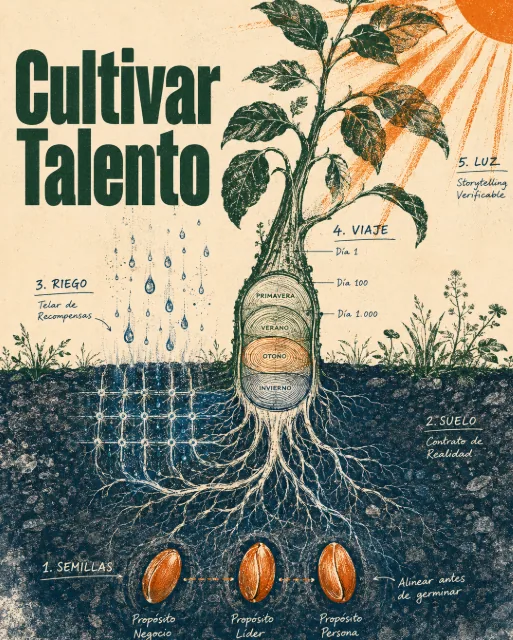
We'd been talking about cycles for a while. About how organizations need time for a person to really put down roots. About how the first months are seed, then comes soil, then water. (The theory of the seasons that sits at the centre of everything we do at W Advisory España , our leadership and culture development practice. https://cultivandotalento.es/)
And then he looked at me and said:
"Listen, Manu. If you say cycles run three years... you've been at W for more than a thousand days. Have you finished yours?"
I laughed. But the question stayed with me.
1,170 days.
From when we incorporated the company, in March 2023, until today. More than a thousand days.
And the honest answer is yes. I've completed the cycle. I've renewed. And I'm more motivated than on day one.
But that isn't the interesting part.
The interesting part is what has changed in those 1,170 days.
When I arrived at W I came from the headhunting we've always known. Identify talent, move pieces, close processes. Work that still strikes me as important.
But the sector has mutated. And whoever doesn't see it yet is going to see it soon.
Traditional headhunting, the kind that runs on the same old contact book and pure instinct, has its days numbered. Not because people are going to disappear. But because the way of finding them, understanding them and attracting them is changing at a speed few in the sector want to admit out loud.
I do want to admit it.
And I want to join that transformation from the inside. Not to slam the door shut. But to close it properly. With the conviction that what's coming has to be more human than what we're leaving behind. More human thanks to technology, not in spite of it.
For years I've been working on a thesis about how talent grows, or dies, inside organizations. I sum it up in five elements: seeds, soil, water, journey and light.
Journey is the one occupying me now.
Every professional travels a journey. So does every team. And that journey has cycles, it has hinge moments, it has points where it renews or stalls. The 1,000 days are one of those points. What I'm seeing in the companies we work with confirms there's something structural behind why some organizations turn talent into competitive advantage and others lose it without understanding why. And I want to keep digging into that thesis, because I don't think the sector has reached this conversation yet.
These 1,170 days have taught me four things about how companies scale (or sink) in the age of AI.
I call them snakes and ladders (like the children's board game).
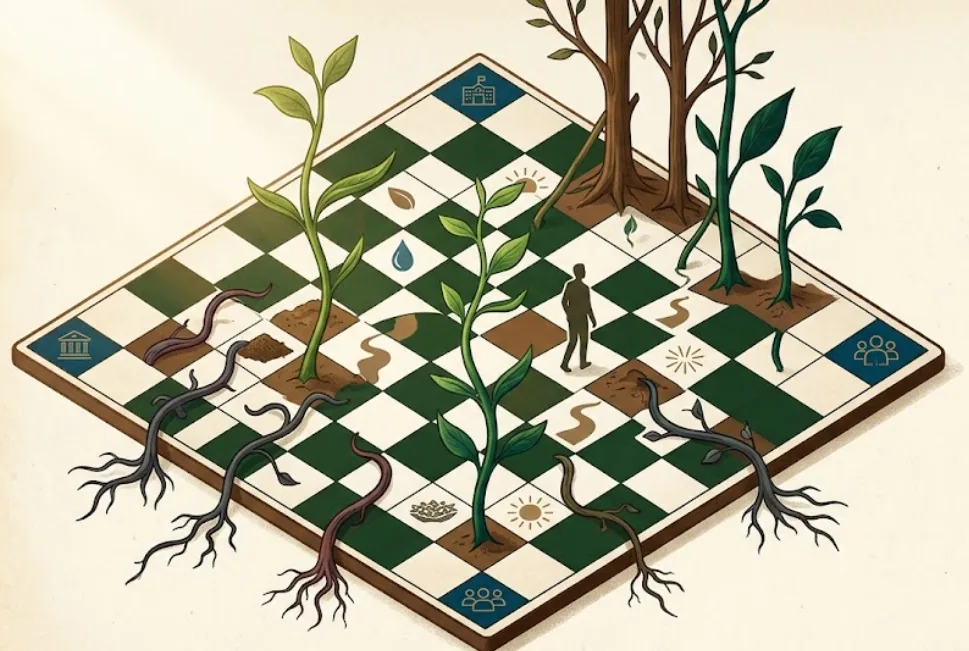
There are companies that climb. And there are companies that, just when they think they're climbing, land on a snake and go back to the start.
The difference almost always comes down to four pillars:
Infrastructure. Is your data house in order? I don't mean a pretty CRM. I mean knowing exactly where your most critical information lives and how it flows. Without this, everything you build on top is set dressing.
Governance and compliance. European, American and Asian AI regulation isn't bureaucracy. It's the playing field. Whoever ignores it today will pay twice over in two years.
Business model. And here comes the most uncomfortable point. AI that isn't structurally integrated into the centre of your business model isn't strategy, it's fashion. I'm not talking about pilot projects or experimenting. I'm talking about your way of creating value having to change at the root. Because if AI is a patch over what you were already doing, in two years someone who has it at the core will have eaten your lunch before you noticed.
Culture and people. The most underestimated pillar. It doesn't matter what technology you deploy: if your people don't understand it as their own, they won't adopt it. And then you have an expensive investment gathering dust on a server.
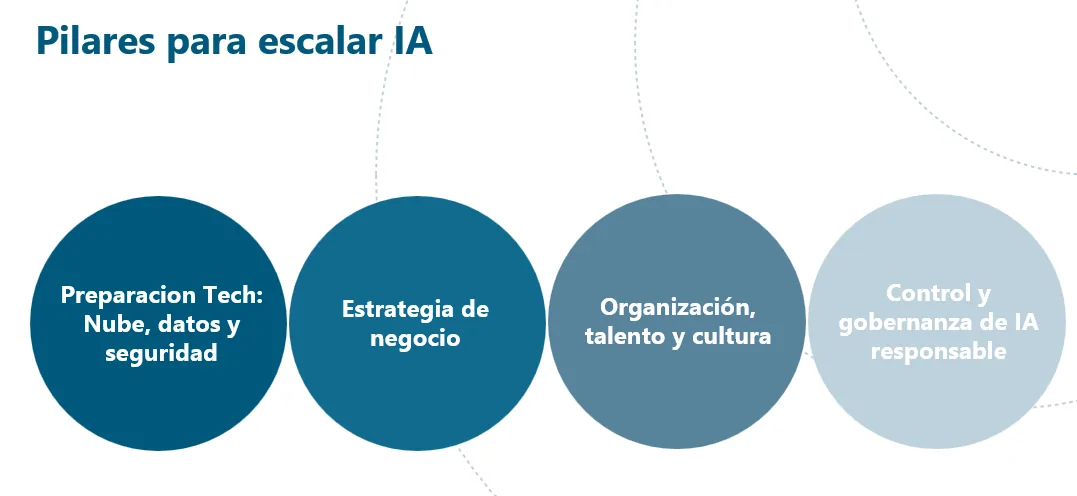
I'm working with a client right now on that exact challenge. Aligning all four. Making sure the seeds find the right soil, that the water reaches where it needs to reach.
It's the work that connects me most with the purpose of all this.
Back to the question.
Yes, I've completed the thousand-day cycle. And I'm not leaving.
But what I do has changed. What moves me has changed.
The headhunting I want to practise is no longer the one from three years ago. It's one that understands that technology doesn't replace talent. It amplifies it. Or it crushes it. Depending on how prepared you are.
And on top of that, what moves me most today is being able to walk alongside the leaders making the most important decisions in their organizations: the ones about culture. Being in that conversation with the CEO or the executive who understands that culture isn't declared, it's built, and that technology is the most powerful lever they have right now to do it well, or to do it terribly.
That accompaniment, one to one, with whoever really decides, is what has me more motivated than ever.
The sector has to mutate. And I'd rather be among those leading that mutation than among those criticizing it from the outside once it's too late.
What about you? Which side of the board are you on?
Manu