Between the Lines of Leadership · A Headhunter's Picks (65)
The only competitive advantage that matters in a boardroom today
Some books change the way you read a leadership team.
Think Again, by @Adam Grant, is one of them. I opened it expecting a psychology book. What I found was an autopsy of why the most brilliant executives sink profitable companies.
Inside it there's a 75-year-old story I've been telling executives for years: how thirteen men died because they wouldn't drop their axes. And why I watch it play out in Madrid offices almost every single week.
August 1949. Mann Gulch, Montana. Fifteen smokejumpers parachute onto a wildfire and, within minutes, everything goes wrong.
The wind shifts. The fire breaks loose. The foreman, Wagner Dodge, shouts at his men to run uphill and drop their tools to pick up speed.
Not one of them let go.
Fifteen men tried to outrun a wall of flames hauling axes and shovels. Dodge, in seconds, did something else: he set fire to the grass in front of him to starve the main blaze of fuel. He lay down in the ashes of the clearing he'd just created. He waited.
He survived.
Thirteen of his men didn't. Not because they didn't run. Because they couldn't let go of the gear that had defined their entire careers.
From my office I watch that exact scene almost every week. Brilliant executives who see the fire coming, the tech disruption, a sudden market shift, an AI that's eating their lunch, and choose to burn rather than drop the mental tools that got them to the office they sit in.
And here's the uncomfortable part: the more brilliant you are, the harder it is to let go.
Grant's thesis is blunt: mental agility, the ability to rethink and unlearn what we take for granted, is a leadership competency that sits well above traditional intelligence. And it holds up a pretty unflattering mirror to those of us in the CEO seat.
The brilliance syndrome and the three disguises of the ego
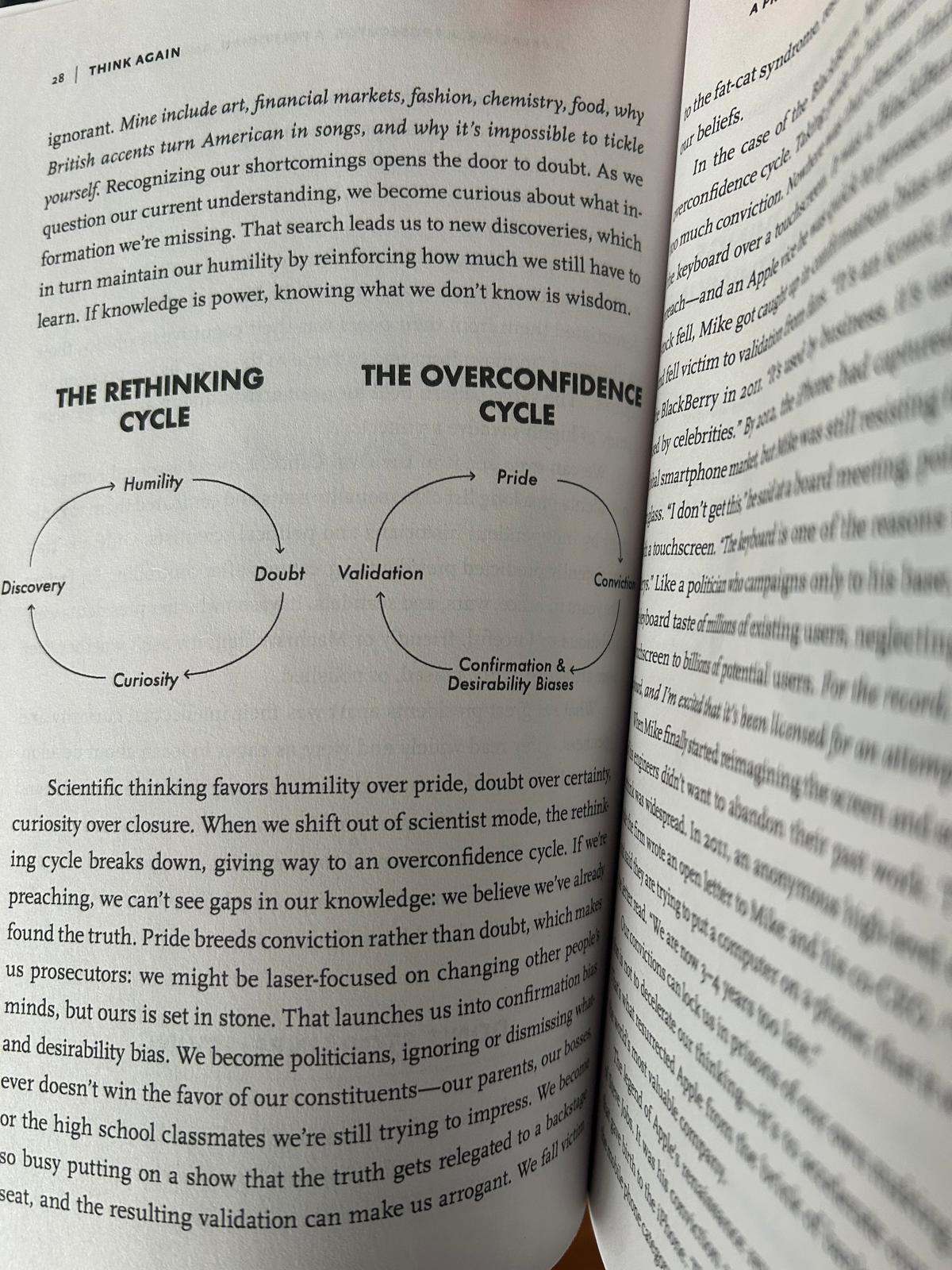
Grant says that when we defend a strategy or a project, we almost always put on one of these three disguises:
• the preacher, who defends his ideals as dogma against any outside threat.
• the prosecutor, who marshals data to ruthlessly tear the other side apart and win the case.
• the politician, who campaigns nonstop to win over the room.
All three disguises have one thing in common: they shut down self-criticism.
Mike Lazaridis is the textbook case. He turned BlackBerry into the absolute king of the smartphone market for professionals. When the iPhone showed up, he refused to unlearn. He was convinced, from the pulpit of a successful creator, that no executive would ever accept a phone without a physical keyboard in their pocket.
Today BlackBerry is a Harvard Business School case study.
The alternative, Grant says, is to operate like a scientist. To treat your opinions, your business models and your market convictions as temporary hypotheses you have to test, not certainties you have to defend.
Sounds academic. It's brutally pragmatic. In an experiment with entrepreneurs, the ones who trained this mindset pivoted on their original idea far faster and averaged more than 12,000 dollars in revenue. The group that rethought nothing stalled at 300.
Why being right makes you lose the argument
Rethinking is hard when you look in the mirror. It's brutal when you try to get someone else to do it.
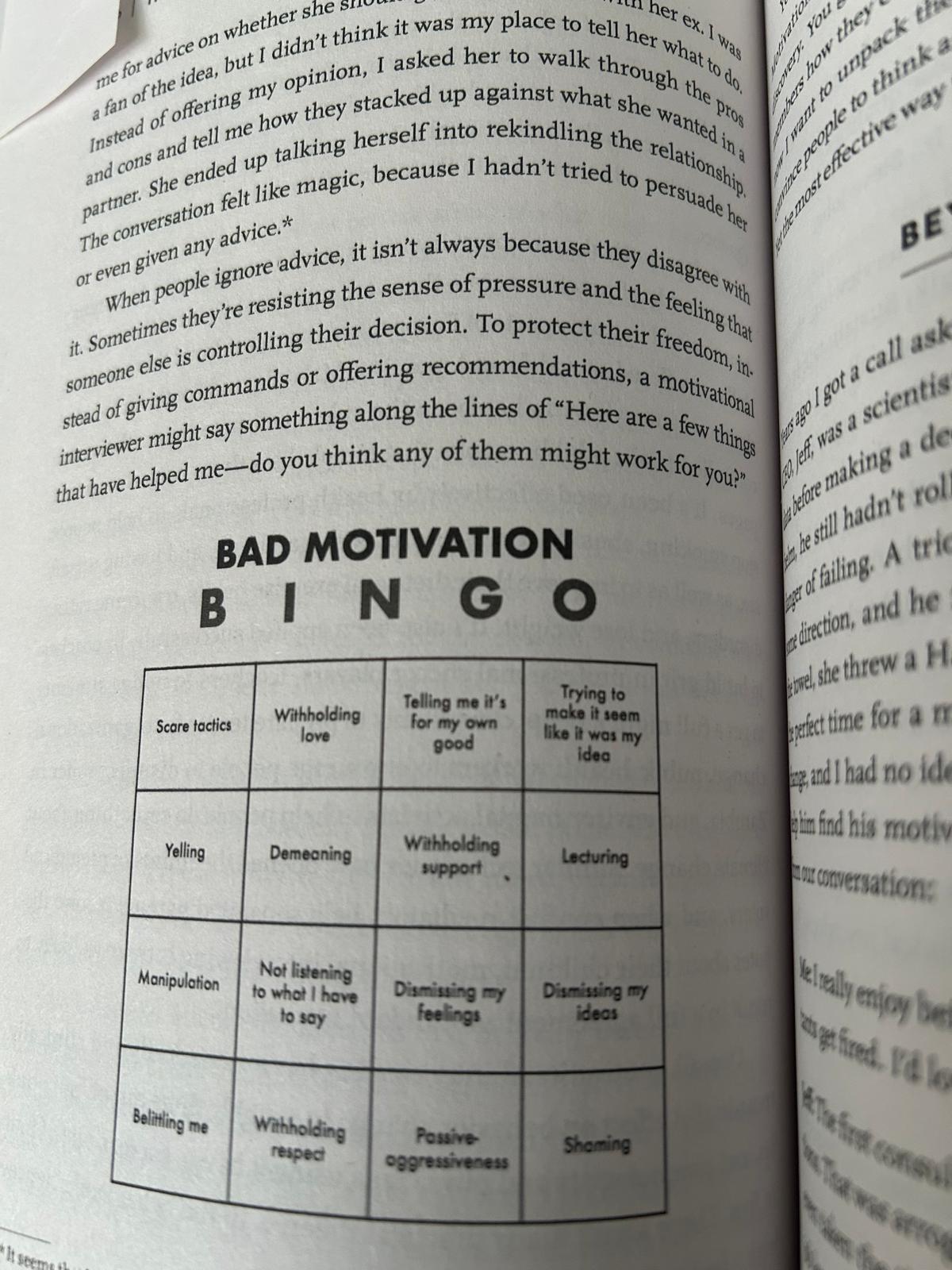
What does the average CEO do when a middle manager digs in on a bad idea? Crushes them with data. Pulls out the spreadsheet. Lays the airtight financial analysis on the table. The natural instinct is to win the argument.
Grant himself admits he falls into that trap. "More than once I've been called a logic bully," he writes.
I fall into it too. More often than I'd like.
And that's the problem: aggressively rebutting an opinion fires up the other person's defense system. It doesn't change their mind. It makes them dig in harder. Rebutting someone builds antibodies against your future attempts to influence them.
There's a story that haunts me. Daryl Davis is a Black musician who has convinced, just by talking, more than 200 people to leave the Ku Klux Klan.
He didn't recite statistics on equality. He had dinner with them. He listened without judging. He asked questions. Change, Davis says, has to be born inside the other person. Force it, and it lasts three minutes.
In a hospital in Quebec, Dr. Arnaud Gagneur got far more mothers to agree to vaccinate their children. Not with science lectures. With open questions. By listening to their fears without invalidating them.
In your leadership team it's exactly the same: instead of forcing someone to change, help them find their own reason to do it. Spotting the small signs that they already want to move is infinitely more useful than pounding on their resistance.
The art of fighting well in the boardroom
We get to the trickiest ground in managing people: how to argue well without blowing up the team from the inside.
Grant separates two kinds of friction we almost always confuse:
• Task conflict: intense disagreement about how to execute an idea. Productive. Necessary.
• Relationship conflict: emotional warfare with personal clashes. Toxic. It hollows out your company.
The Wright brothers spent months screaming at each other over the exact design of their machine's propellers. They weren't attacking each other. They were attacking the problem of aerodynamic physics. That's the good kind of conflict: two minds at war with reality, not with each other.
There's a type of leader who knows how to hold those debates: what the research calls confident humility. Believing in yourself enough to hold your course. Questioning yourself enough not to crash.
And for a team to dare to really push back, you need something Amy Edmondson has spent decades studying: psychological safety. Her safest hospital teams officially report more errors than the rest. Not because they make more. Because they stop hiding them.
If errors get hidden in your leadership team, you don't have a team. You have an orchestra playing to keep from getting fired.
What you can do this very Monday
Bringing all of this down to the bottom line takes method, not cheap philosophy. Three moves to start on Monday.
- Name your critics.Build a challenge network: two or three professionals you respect who aren't wired to agree with you. Ask them point-blank to tear your next strategic decision apart. Your only job in that room is to listen and not defend yourself. It's hard. It saves companies.
- Change the questions.When someone clings to a position, stop asking why they're defending it. Ask how it would work, step by step, in operational reality. As they spell out the mechanics, people run into their own gaps. The extremes soften on their own.
- Hold the funeral early.Instead of running expensive autopsies once an initiative has already sunk, install the pre-mortem. Get the team together before launch, announce hypothetically that the project has failed spectacularly, and work backward to figure out what killed it. What comes out of that meeting is worth twice an expensive consultant.
The market isn't going to slow down to prove you right. Your technical intelligence got you to the office you sit in today, but it won't keep you there if you insist on lugging around the tools of your past wins.
Review your convictions with the same cold eye you bring to the P&L.
If reading this makes you uncomfortable, good: that's where the work begins.
Stubbornness is far too expensive a luxury when the fire is already climbing the hill.