Between the Lines of Leadership · A Headhunter's Picks (26)
This book has been around for a while, but I think it deserves a revisit. The truth is it's helped me a lot in the past whenever I needed to get crystal clear on my focus. There's plenty I could say (and we'll get into it), like the emotional bank account. But let's zero in and see what Covey has for us in this great book. Remember that a few editions back we covered another of his books, "The Speed of Trust", where that same differentiating value is also key. If you missed it, I'd encourage you to read it. (SPEED OF TRUST)
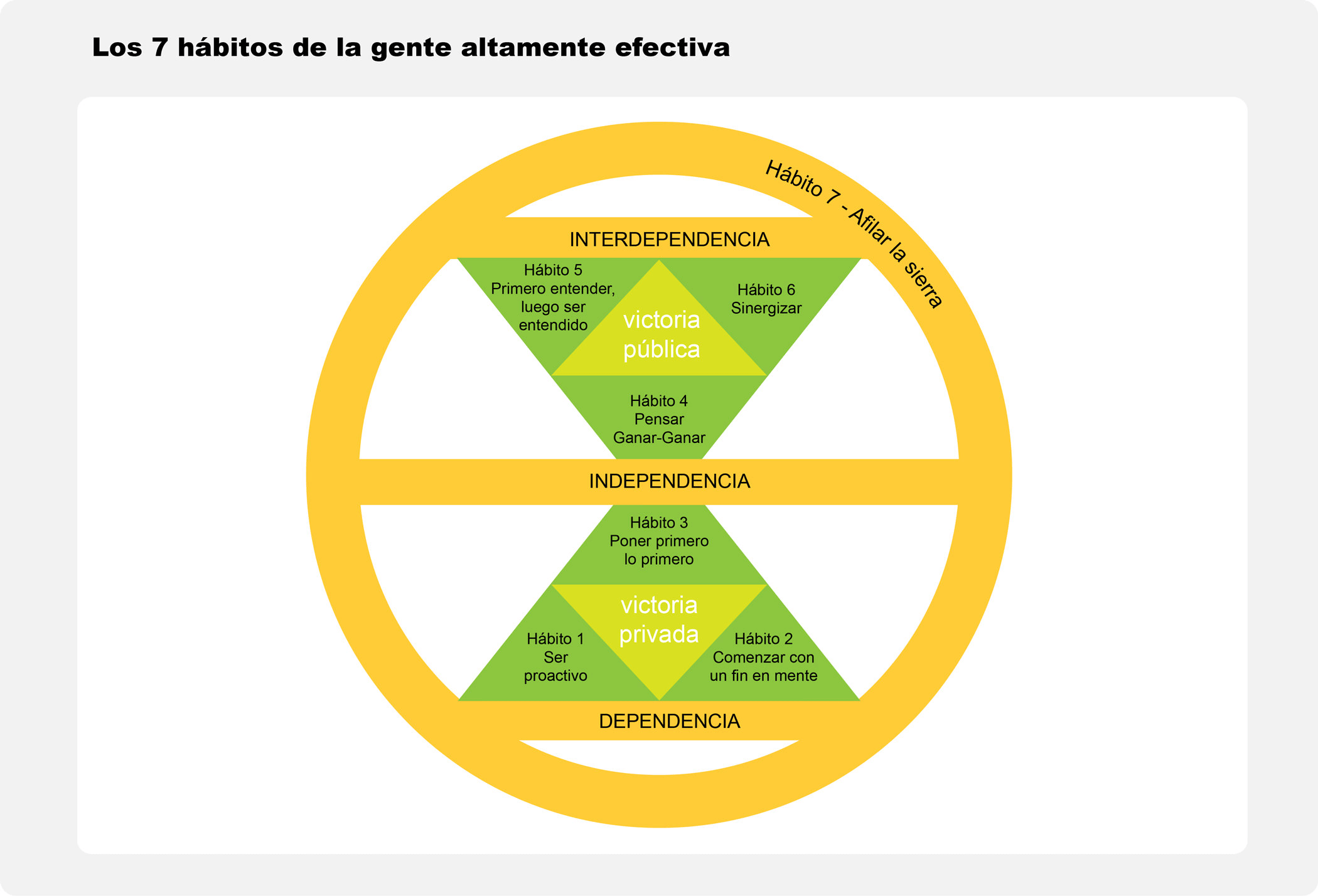
The 7 Habits
- Be Proactive
- Begin with the End in Mind
- Put First Things First
- Think Win/Win
- Seek First to Understand, Then to Be Understood
- Synergize
- Sharpen the Saw
https://amzn.eu/d/0i7IONUy
Boosting Efficiency and Productivity
The seven habits of highly effective people, laid out by the Stephen R. Covey Leadership Center , are an essential guide to improving efficiency and productivity at work. These habits don't just change the way we act, they change the way we think, letting us reach meaningful, lasting results. By adopting these principles, professionals can build a proactive mindset, set clear goals, prioritize what matters, foster collaborative relationships, communicate effectively, tap into the team's strengths and keep growing. Together, these habits are the key to outstanding performance at work and well-rounded personal growth.
The Emotional Bank Account: The Key to Effective Relationships
Stephen R. Covey introduces the idea of the "Emotional Bank Account" as a metaphor for the level of trust and security in our relationships. Every interaction with others can be seen as either a deposit or a withdrawal from this emotional account.
- Deposits: Acts of kindness, courtesy, honesty and keeping promises strengthen the relationship and raise the account balance.
- Withdrawals: Acts of rudeness, disrespect, broken promises or dishonesty lower the balance, eroding trust and the relationship.
The Power of the Emotional Bank Account
- Stronger Relationships: Keeping a positive balance builds solid, trusting relationships, which are essential for teamwork and collaboration.
- Better Communication: A healthy emotional account makes open, honest communication easier, cutting down on misunderstandings and conflict.
- Resilient Relationships: A high emotional balance lets you ride out misunderstandings and minor conflicts without doing real damage to the relationship.
- A Positive Work Environment: It fosters a respectful, collaborative workplace where people feel valued and understood, which in turn improves efficiency and productivity at work.
Understanding and managing the emotional bank account is fundamental to applying the seven habits successfully, because it provides the foundation of trust you need to build effective, lasting relationships.
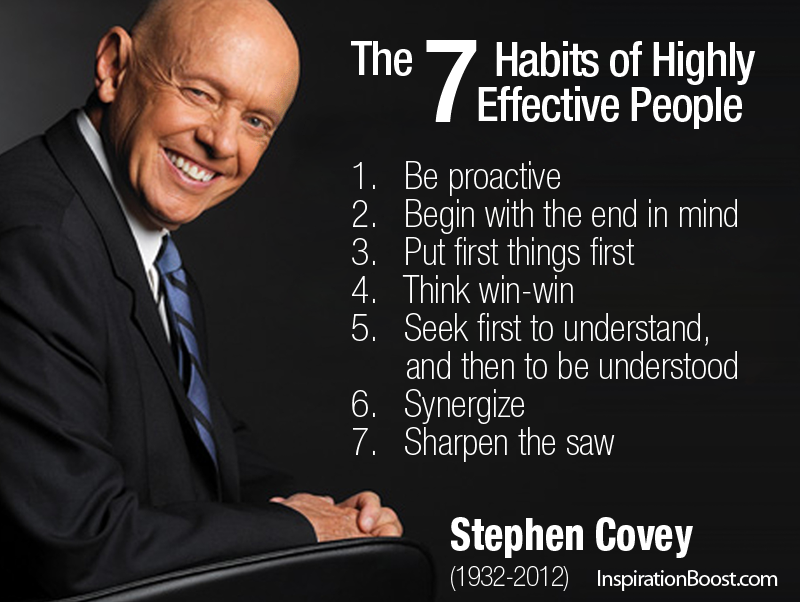
Covey
The 7 Habits at Work
- Be Proactive Meaning: Take responsibility for our actions and decisions. Example: Tackle a team problem and propose solutions instead of waiting for instructions.
- Begin with the End in Mind Meaning: Define clear goals and aim your actions at reaching them. Example: Set quarterly targets and line up your daily tasks to hit them.
- Put First Things First Meaning: Prioritize what's important over what's merely urgent. Example: Carve out time to plan strategic projects before answering emails.
- Think Win/Win Meaning: Look for agreements and solutions that work for everyone. Example: Negotiate with a client in a way that meets their needs and hits the company's goals.
- Seek First to Understand, Then to Be Understood Meaning: Listen actively before putting your own ideas out there. Example: In a meeting, pay attention to your colleagues' concerns before pitching your proposal.
- Synergize Meaning: Collaborate and value differences to get better results. Example: Build cross-functional teams to develop a new product, drawing on a range of skills and perspectives.
- Sharpen the Saw Meaning: Renew and keep improving yourself physically, mentally, emotionally and spiritually. Example: Take training courses and make time for activities that support your personal well-being.
As always, an image says it best. ( Stephen M. R. Covey )
Bonus track, 😉 I can't resist sharing this talk by Adam Grant that backs up everything above really well:
Key Takeaways from Adam Grant's TED Talk "The Surprising Habits of Original Thinkers"
- Strategic Procrastination: Grant argues that procrastination can lead to creativity by giving ideas time to mature.
- Doubting Your First Ideas: Original thinkers often reject their first ideas for being too conventional, hunting for more innovative options.
- Generating Lots of Ideas: Quantity is tied to quality, since more ideas mean more chances to innovate.
- Embracing Failure: Original thinkers see failure as part of the creative and learning process.
P.S. I was that Nintendo geek too 😉, if you watch the video you'll get it.