Between the Lines of Leadership · A Headhunter's Picks (19)
We often try to fit people into a "perfect" system, convinced that's the key to success. But in my experience, it's far more effective to stay flexible with the system and "inflexible" about choosing people who chase excellence. The main key to any project winning is the people. If you've got the best on your team, it's worth adapting the system, always with coherence and logic, and with a clear view of where you want to go.
At WExecutive, we live this philosophy two ways: in building our own team, and in selecting talent for our clients.
With that in mind, there are plenty of books I could recommend, but today I want to share "Who: The A Method for Hiring" by Geoff Smart and Randy Street. This book nails how to structure the process so you make sure you've got the people on your team who'll best help you hit your goals.

https://amzn.eu/d/gaCdZEb
"Who: The A Method for Hiring" by Geoff Smart and Randy Street is all about how hiring the right people is what drives business success. Here are the key points and how you can put them to work in your company:
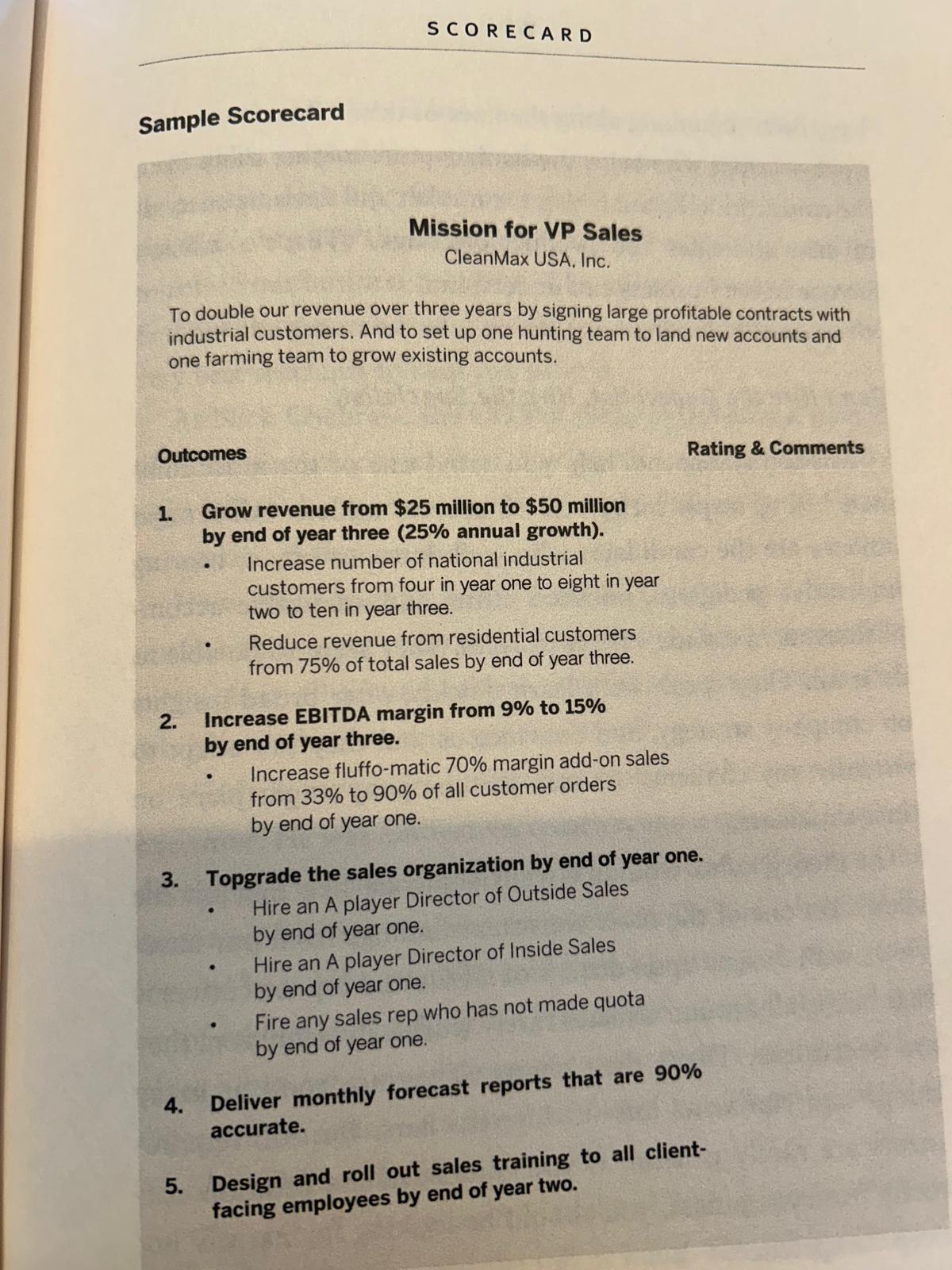
Define the desired outcome (the "Scorecard"):
- Key point: Build a "Scorecard" that clearly defines what you expect the new hire to achieve. That means specific outcomes and the competencies they'll need.
- Application: In any company, it's crucial that every role has a clear description of objectives and responsibilities. This doesn't just help you attract the right candidate, it also gives you a yardstick to evaluate their performance once they're on board.
The Four-Interview Method:
- Key point: Use a structured, sequential interview process built around four types of interview: the screening interview, the topgrading (skills) interview, the focused interview and the reference interview.
- Application: Running this process in your company gives you a thorough, systematic read on candidates, which cuts the risk of hiring someone who isn't right for the role.

Sourcing candidates:
- Key point: Widen your recruiting sources to attract the best talent, including internal referrals, professional networks and job platforms.
- Application: Companies need to diversify their talent channels, encouraging referrals from current employees and using a range of platforms to reach a wider pool.
Evaluating and selecting candidates:
- Key point: Assess candidates objectively, using the "Scorecard" as your guide and making sure they line up with the company's values and culture.
- Application: Use assessment tools and interview techniques that let you pin down key competencies and gauge how well a candidate fits the culture.
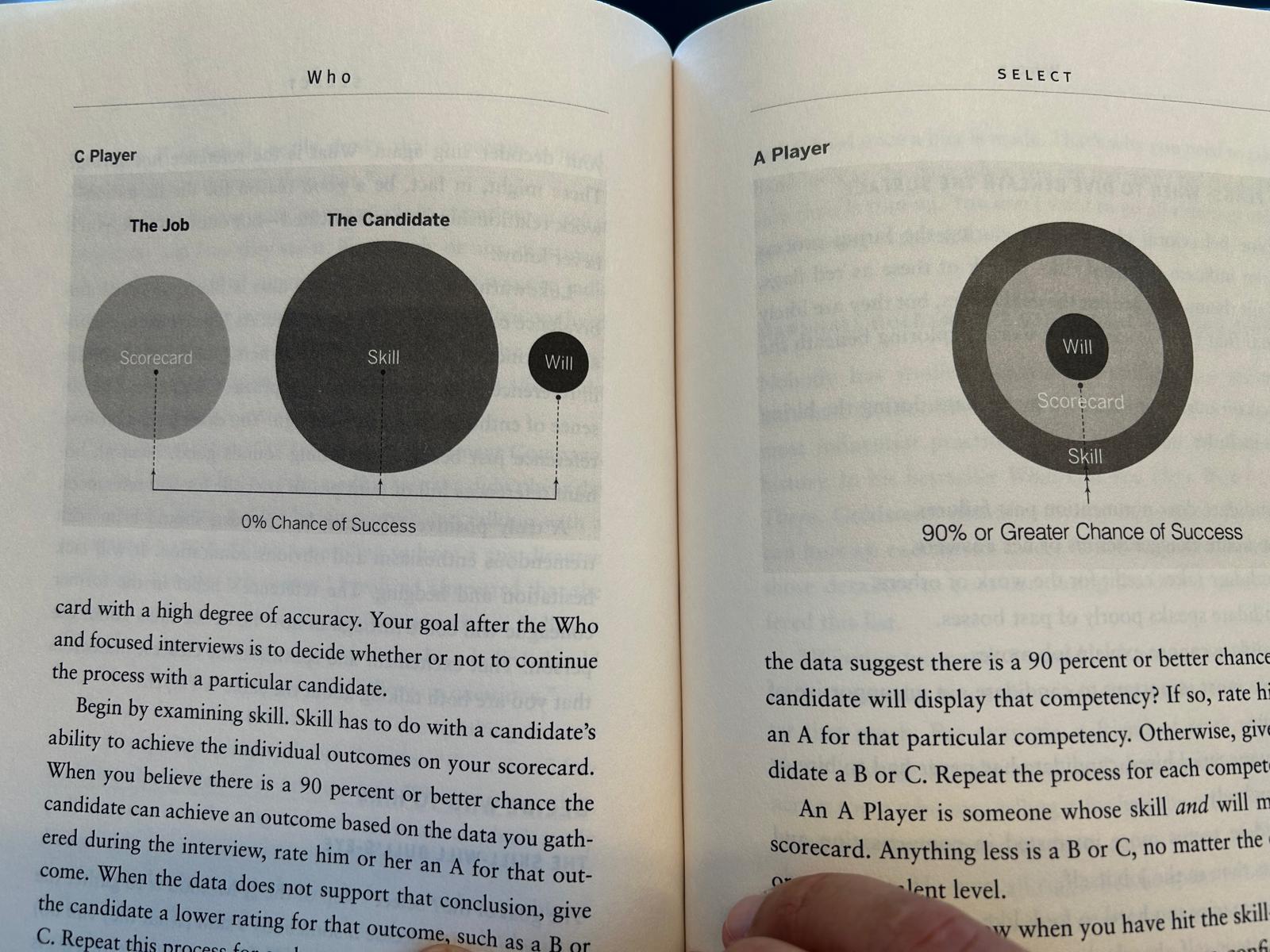
The bullseye theory and lining things up: Passion / what we want, and aptitude.
References and background checks:
- Key point: Run a thorough reference-check process to confirm the candidate's experience and competencies.
- Application: Companies should set up a standard procedure for reference checks that includes specific questions and a read on how reliable the answers really are.

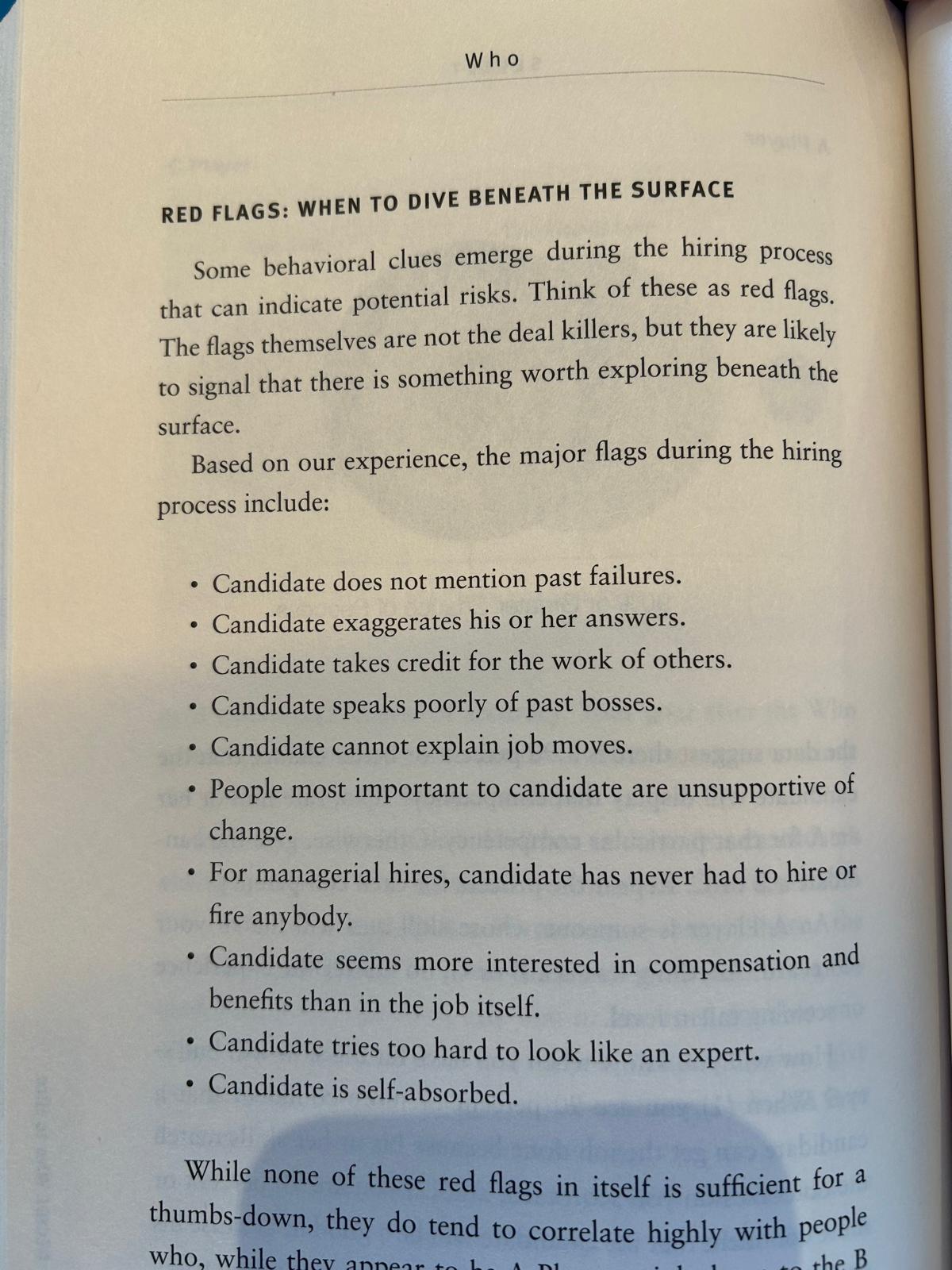
Red flags!
Onboarding and follow-up:
- Key point: Once hired, it's essential to have an onboarding process that helps the new employee get up to speed fast and start contributing in a real way.
- Application: Set up induction and mentoring programs for new hires, with regular check-ins over the first few months to track how they're settling in and performing.

Bonus track: I like asking candidates, especially to read their values and competencies, to think of the person they admire most (it can be someone public or personal, no need to name them). Once they've got that person in mind, I ask them to list the five competencies that define them, along with their values.
Then, quickly, I ask them to give me a personal example where they themselves have shown those values and competencies, not the role model, but them. If someone struggles to come up with examples of what they hold up as their ideal, that can signal a lack of coherence and consistency between who they are and what they project.
To close, I want to highlight the TED talk by Regina Hartley . In her talk, Hartley draws a distinction between "Silver Spoons" and "Scrappers", arguing that Scrappers, because of their life experiences, often develop a resilience and grit that's priceless for any team.
Silver Spoons vs. Scrappers:
- Hartley draws a distinction between two kinds of candidate: the "Silver Spoons" (those who've had a privileged path) and the "Scrappers" (those who've overcome adversity). She argues that Scrappers, because of their life experiences, often have a resilience and determination that makes them valuable for any team.
The Value of Resilience:
- The talk highlights how candidates who've faced real challenges build a capacity to bounce back and adapt that can be crucial on the job. Hartley suggests those qualities often don't show up on a traditional resume.
Evidence of Success:
- Hartley gives examples of successful people who didn't have the most impressive resumes but went on to achieve a lot thanks to their perseverance and their ability to overcome obstacles. It drives home how much you can miss by only reading credentials on paper.
Inclusive Hiring:
- She makes the case for hiring that values a diversity of experiences and skills. By giving Scrappers a real look, companies can tap into a broader range of perspectives and abilities, enriching the team and fueling innovation.
Assessing Potential:
- Hartley stresses that employers need to adjust their evaluation methods to spot potential beyond academic qualifications and traditional work experience. That means valuing personal stories and soft skills that aren't always visible on a resume.