Between the Lines of Leadership · A Headhunter's Picks (56)
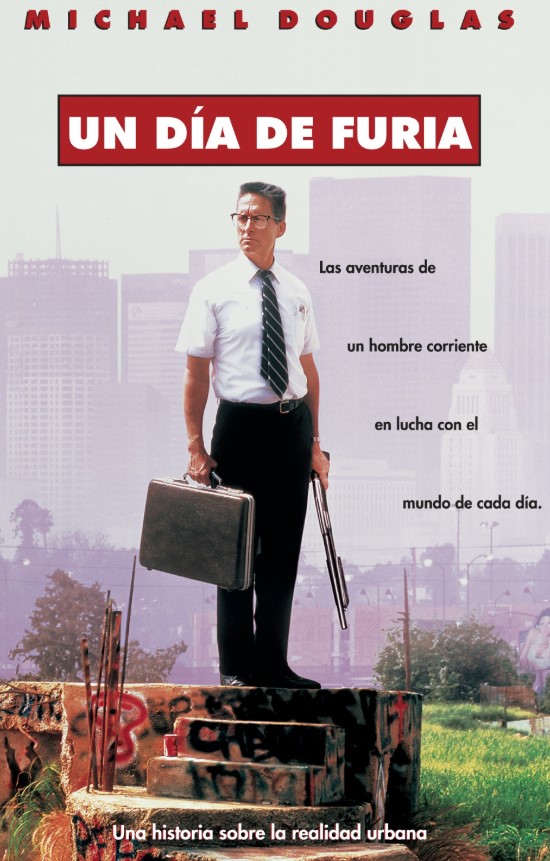
Michael Douglas, white shirt, loose tie, that thousand-yard stare. We all remember the scene from Falling Down: a man trapped in a traffic jam, the heat baking the asphalt, cars that won't move, and the suffocating feeling of being locked in a place with no way out. From there, his frustration keeps building until, inevitably, he snaps.
It's no accident that so many people see that metaphor in what's happening in some offices today. Because for a lot of companies, the return to the office has turned into a kind of organized gridlock: forcing everyone back with no real purpose beyond "filling seats".
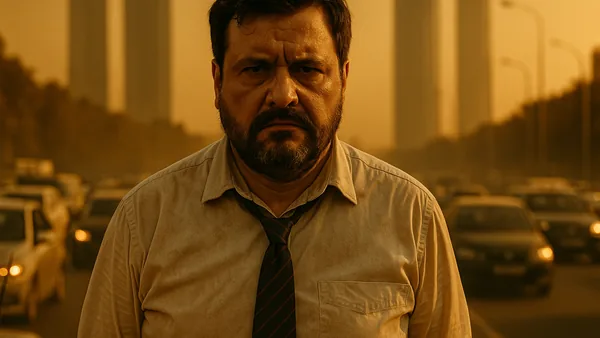
And I think about it most mornings when I drive past the Cuatro Torres district in Madrid: cars at a standstill, windows down, the odd loose tie, a flash of frustration on someone's face… and I can't help picturing that if you handed those drivers a pair of glasses, we'd be watching Michael Douglas shoot a Spanish remake of Falling Down. (I say it as a joke, but the scene hits a little too close.)
The mistake of mandates
Some companies believe that automatic in-office presence creates culture. That more friction = more team. That more hours together = more productivity. But we already know that equation is false.
The reality is that, without a clear why, the office becomes a hamster wheel. It spins, but it doesn't go anywhere. And that feeling is lethal for talent: it kills motivation, erodes culture and drives turnover up.
And to top it off, a lot of post-pandemic offices redesigned their space assuming there'd be more rotation and less in-person work. The result? Now they're trying to cram twice as many people into the same room. What used to be a workplace turns into another movie: The Hunger Games. Except instead of fighting for survival, the daily battle is finding an open chair to sit in.

My take: flexibility with purpose
For me, flexibility isn't a perk, it's a principle. It doesn't mean working less, it means working better. The challenge is balancing three key factors:
- Accountability: everyone has to know how to organize themselves, focused on their goals and on the quality of what they deliver.
- Choice: the office shouldn't feel like an imposition, but a resource. A place you go to because it adds value, not because some policy says so.
- Value: being in the office only makes sense if it adds something. If the experience there sparks more motivation, learning and connection than staying home would.
The real magic happens when someone chooses to come in because they know that day they'll find something they can't get remotely: a conversation that opens a new path, a brainstorm that catches fire on the whiteboard, a lunch where trust starts to build.
How to give the office a purpose
Flexibility with purpose doesn't mean leaving everything to chance. It means designing experiences and dynamics that make time in the office worth it. A few concrete ideas:
- Turn the office into a place to learn. Not just with training, but with spaces to share best practices, peer micro-talks or cross-mentoring.
- Design high-value gatherings. Not everything should be "desk work": run creative sessions, workshops, meetings people enjoy for the quality of the exchange.
- Get the logistics right. Easier access, flexible hours, parking or other transport options. The practical stuff adds to the purpose too.
- Create cultural moments. Ritualize the coffees, team breakfasts or small celebrations. The symbolic builds more culture than any mandate.
- Make results visible. Showing what gets achieved when people work together in person reinforces the value of being there.
- A place to thank and recognize your team in person.
The balance you need
It's true: remotely you can do almost anything. Technology lets us move forward, collaborate and deliver. But it's harder to build culture without seeing each other. So this isn't about choosing between office or remote, it's about understanding when and why it's worth coming in.
If we don't give it that meaning, we fall into the Falling Down trap: people stuck in a physical gridlock… or a mental one.
And that's exactly what we have to avoid. Because in the end, the challenge isn't retaining talent, it's cultivating it. And to cultivate it we need spaces with purpose, moments that add up and people who want to be there. Not because they're forced to, but because they feel something worthwhile is happening.
👉 The office shouldn't be a traffic jam. It should be a place where talent breathes, grows and multiplies.