Between the Lines of Leadership · A Headhunter's Picks (55)
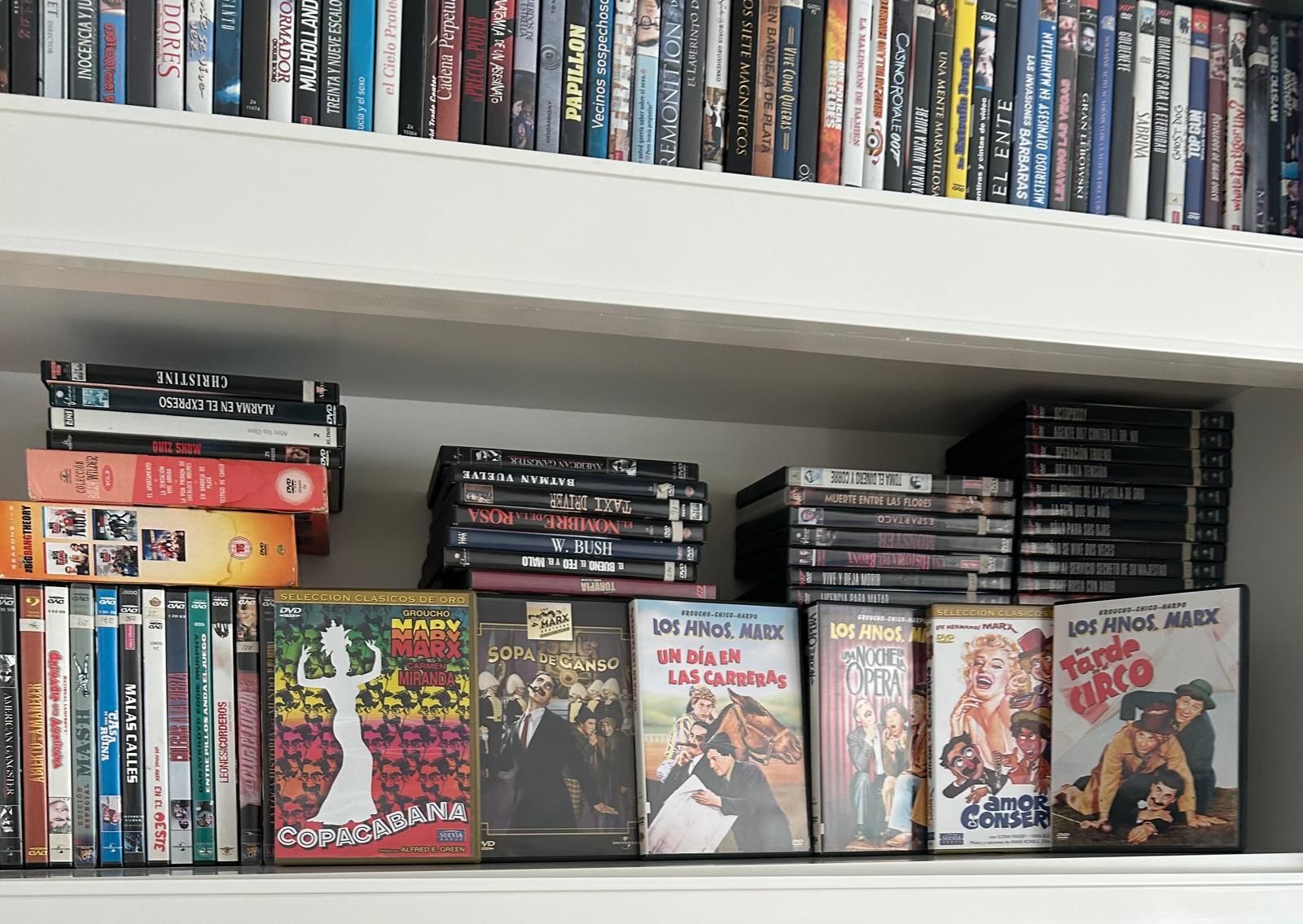
As a kid, I remember sitting in front of the TV, hypnotized by the Marx Brothers' films. Those absurd scenes, the impossible one-liners, chaos turned into comedy… they're part of who I am. In that Spain, we didn't watch films with subtitles or talk about "anglicisms": they were A Night at the Opera, Duck Soup, Go West… classics that taught us, without us even noticing, to look at the world a little differently.
Today, running a company, I realize that a lot of what we learned while laughing applies directly to leadership, to team culture and to how you cultivate talent in times of relative abundance… or scarcity. Because the Marx Brothers didn't just make people laugh: they taught us to sharpen our wits when resources were thin and to find joy in the middle of chaos, reminding us that what we now call a VUCA world was already here 90 years ago.
The party of the first part: radical clarity, without losing trust
The famous contract scene in A Night at the Opera is a masterclass in simplicity. Groucho and Chico tear out clause after nonsensical clause until there's almost nothing left of the document. We've all felt that madness: contracts, addenda and rules that, instead of helping, just get in the way.
In fields like executive search, where the commercial side really matters, you need rules to keep order, pricing and respect between colleagues. But when that framework turns into a maze of exceptions and "party of the first part" clauses, the effect flips: more friction, less speed.
This is where what Stephen Covey called the speed of trust comes in. An organization doesn't need 400 pages of rules if it has clear foundations and a shared editorial line. With trust and culture, contracts shrink and everything moves faster. Because at the end of the day, rules are a support, but the relationship is what holds the business together: if someone doesn't want to collaborate, no number of clauses will make the deal work.
The takeaway for your company:
- Keep a clear commercial framework, but a light one.
- Build relationships that allow flexibility without losing order.
- Remember that rules set the floor, but trust sets the pace.
Worth watching the scene :) it's brilliant….
The stateroom: the hidden cost of complexity
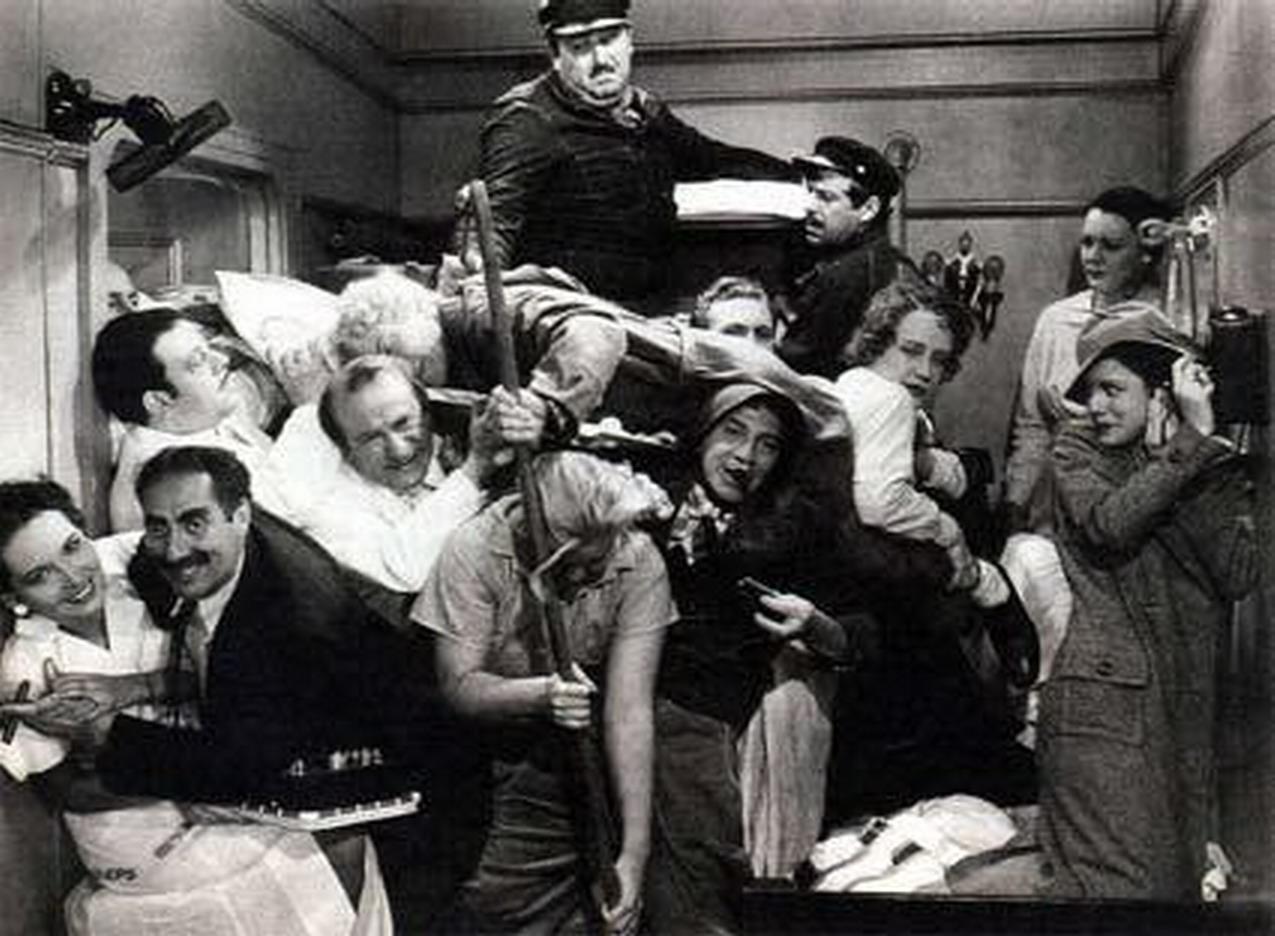
The crowded stateroom sequence, also from A Night at the Opera, is a perfect mirror of overload in organizations. Every new person who walks in seems harmless… until all of them together make it impossible to move.
That's exactly what happens with meetings that have too many guests, projects with too many hands, or decisions that need twenty sign-offs.
The takeaway for your company:
- 6 people max per meeting, with a clear objective in the invite.
- If a topic fits on one page, it doesn't need an all hands.
- Do the "person-minute" math: does it make sense to burn collective hours on a minor issue?
The mirror in Duck Soup: coordination and trust
The famous mirror scene is a leadership lesson without a single word. Harpo mimics Groucho's every move, and what could be chaos becomes a precise dance. That's the magic of alignment: minimal signals, maximum trust.
The takeaway for your company:
- Make sure every project kicks off with an alignment ritual: what success means, who does what.
- Use shared checklists: small mirrors that prevent costly mistakes.
- If the choreography isn't working, change the script, don't blame the dancer.
"More wood!": growing without burning the train
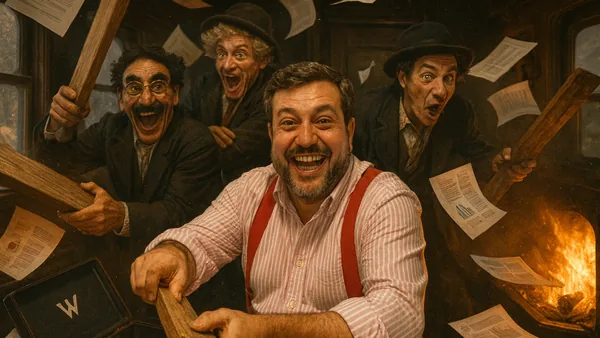
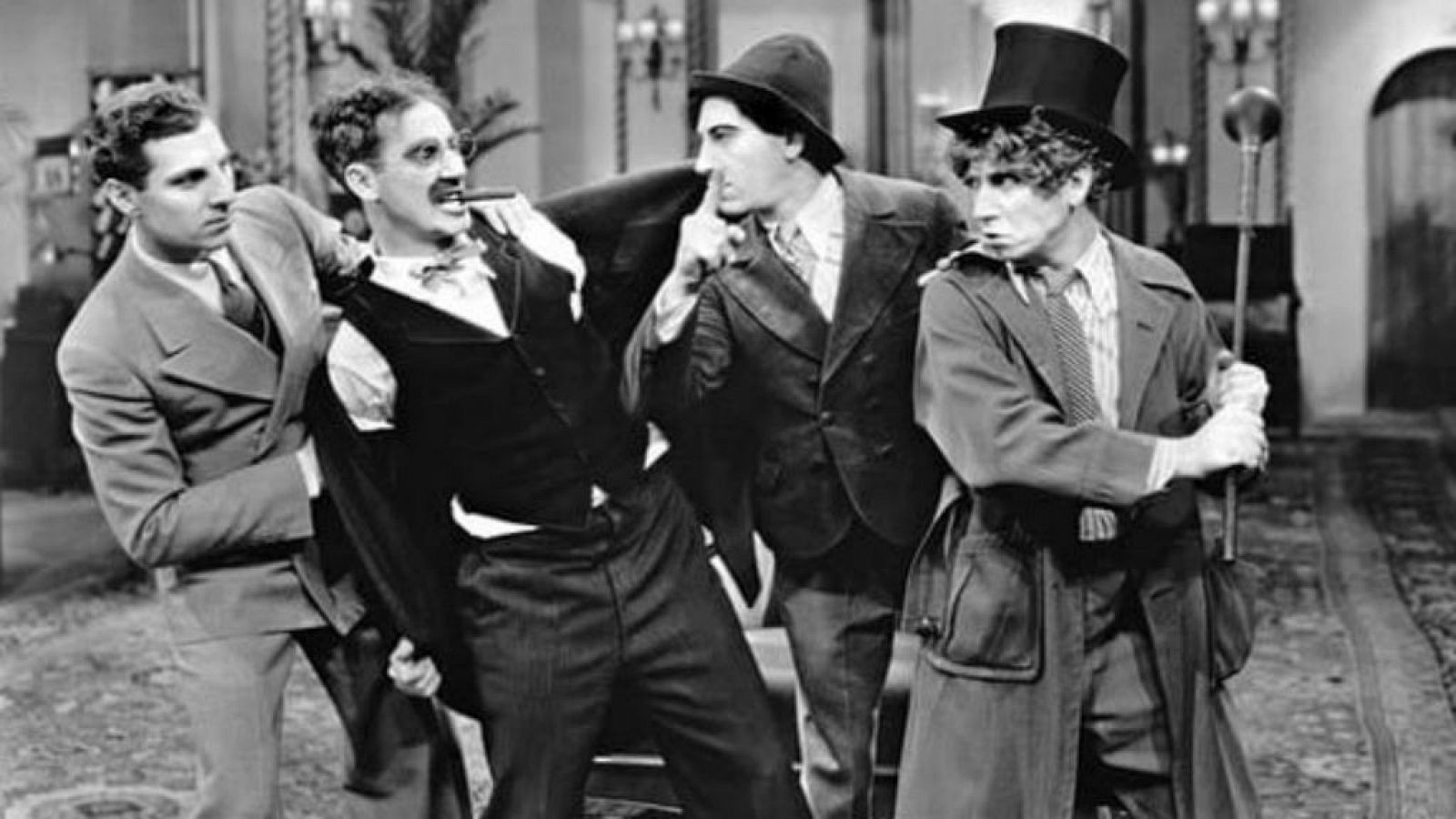
In Go West, the locomotive only keeps moving because the characters feed it with the train's own planks. The scene is as funny as it is tragic: to gain speed, they destroy the very thing holding them up.
In business it happens when, in order to grow, we burn culture, cash or people. We move fast, but every meter leaves us with less train.
The takeaway for your company:
- Before adding "more wood" (people, spend, projects), ask whether you're eating into your own structure.
- Celebrate revenue, yes, but also the building of talent and the satisfaction of clients.
- Remember: one process improvement is worth more than three urgent hires.
Rehearse before you shoot: iterate with the audience
The Marx Brothers, under Irving Thalberg at MGM, rehearsed their scenes in touring theaters before filming them. They tested what worked, polished the timing and tweaked until every gag was perfect.
That's what we now call testing with users. The learning isn't in the office, it's in direct contact with whoever's on the receiving end of your work.
The takeaway for your company:
- Run "beta versions" with clients or candidates.
- Set up quick read-throughs of proposals to spot friction.
- Measure how many iterations you go through before you go to market.
Epilogue
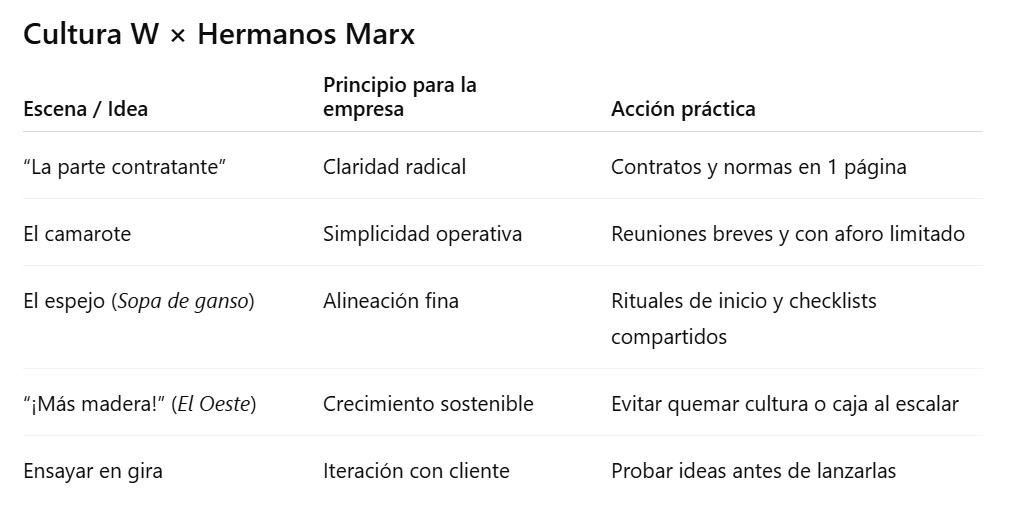
The Marx Brothers lived and filmed through times of crisis. They turned chaos into laughter, scarcity into wit and criticism into spectacle. That, deep down, is our job as leaders: bring rhythm to the chaos, turn the absurd into learning and make sure the comedy doesn't become tragedy.
At W Culture we say it's not about retaining talent, it's about cultivating it. The Marx Brothers knew it: it's not about stretching scenes out, it's about making every second count.
A question for you: Which Marx scene are you living in your company right now? The endless contract, the crowded stateroom, the mirror, the wood going up in flames, or the dress rehearsal?