Between the Lines of Leadership · A Headhunter's Picks (41)
The Tipping Point: Keys to Leadership and Cultivating Talent
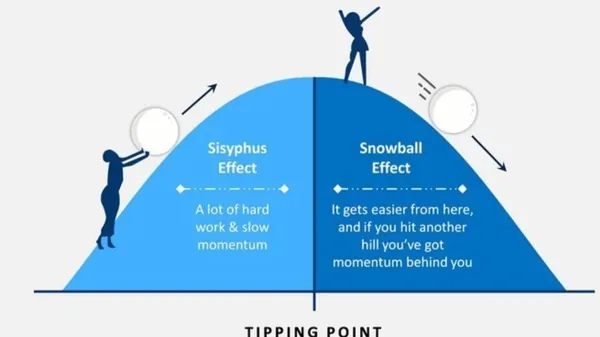
In The Tipping Point, @Malcolm Gladwell digs into how small changes can spark big transformations. Apply his ideas to leadership and talent management, and three core principles jump out, the kind that can make all the difference when you're tackling organizational challenges, driving personal growth and building more effective teams.

1. The Law of the Few
Gladwell makes the point that a small group of people, the connectors, the mavens and the salesmen, can have an outsized impact on whether an idea or project takes off. Connectors build wide, deep networks; mavens bring specialized knowledge; and salesmen inspire action through their energy and persuasion.
The takeaway for leaders: Spot the "connectors" on your team, the ones with strong relationships who know how to bring people together, not just internally but with clients and strategic partners too. Lean on your "mavens", the ones whose knowledge inspires trust and adds real, differential value to projects. And don't underestimate your "salesmen", the people who can spread enthusiasm, build commitment and push the rest of the team toward ambitious goals.
On top of that, find the balance between these profiles and play their strengths off each other. A well-balanced team can clear obstacles and hit results that would be impossible in isolation.

Case Study: Gladwell tells the story of Hush Puppies, a shoe brand that had all but died off in the early 90s, then turned into a global phenomenon thanks to a small group of young connectors in New York. These influencers started wearing the shoes as a style statement, which quickly caught everyone's attention and set off a wave of popularity that had the brand selling millions of pairs in a matter of months. The story shows how connectors can be the catalyst for major change by tapping their networks and their power to influence.
2. The Stickiness Factor
For an idea to stick and drive action, it has to be clear, compelling and relevant. Gladwell shows how small tweaks in the way we communicate our ideas can make them far "stickier" and seriously boost their impact.
The takeaway for leaders: Work on your communication. Craft clear, meaningful messages that connect with your team's values and priorities. When you're rolling out a new strategy or initiative, for example, make sure the goals are easy to grasp and line up with what your people care about. In cultivating talent, a "sticky" vision is what inspires commitment and keeps motivation alive over the long haul.
Bring in real stories and examples that connect with people emotionally. An inspiring narrative can turn an ordinary message into a powerful leadership tool.

Case Study: The educational show "Sesame Street" is a standout example of the stickiness factor. Gladwell explains how its creators experimented with different formats and approaches to make sure kids were actually learning. By weaving in elements like recurring characters, catchy music and clear messages, they landed a lasting impact on early childhood education.
3. The Power of Context
Gladwell argues that environment shapes behavior in a huge way. Small changes in context can produce big effects. That's especially relevant inside organizations, where work dynamics, culture and the physical environment all shape how teams perform and how satisfied they feel.
The takeaway for leaders: Build an environment that fosters growth, trust and collaboration. From the organizational culture to work dynamics to the physical spaces, every detail counts. An inclusive workspace, paired with practices like open meetings and regular, constructive feedback, can be exactly the context that motivates your team to bring their best.
And don't forget that context also includes how leaders model the behavior they expect. The everyday actions of leaders send far more powerful signals than any policy or speech ever will.
Final Reflection
The Tipping Point reminds us that big change doesn't always take big moves, just small, strategic tweaks to the key people, the communication and the context. As leaders, our challenge is to spot those tipping points and use them to unlock the potential of our teams and our organizations.
What small actions can you take today to make a big impact on your leadership and on talent development in your organization? Take a hard look at your team's current dynamics, the messages you're sending and the tweaks you could make to drive better results. Share your thoughts in the comments or with your team, because the first step toward a big change might be within reach today.

BONUS TRACK
In his well-known Case Study, Gladwell looks at the broken windows theory to illustrate the impact of context on collective behavior. In New York, an effort to scrub graffiti off the subway and crack down on minor offenses contributed to a major drop in crime, at least according to the early analyses. It shows how tackling small problems can set off a positive domino effect, lifting overall behavior in urban and organizational settings alike.
That said, 25 years later the author himself reflected, in a TED talk, that this theory may have overstated its impact and could be flat-out wrong, opening up a debate about how complex contextual factors really are and the need to examine solutions from multiple angles. An interesting close, and a reminder for all of us to think about how ideas and situations evolve.