Between the Lines of Leadership · A Headhunter's Picks (35)
As a huge film lover, I couldn't think of a better book than this one to brilliantly fuse the business world with cinema. Ignacio Lucea pulls it off masterfully, blending both worlds into a perfect mix.
See content credentials
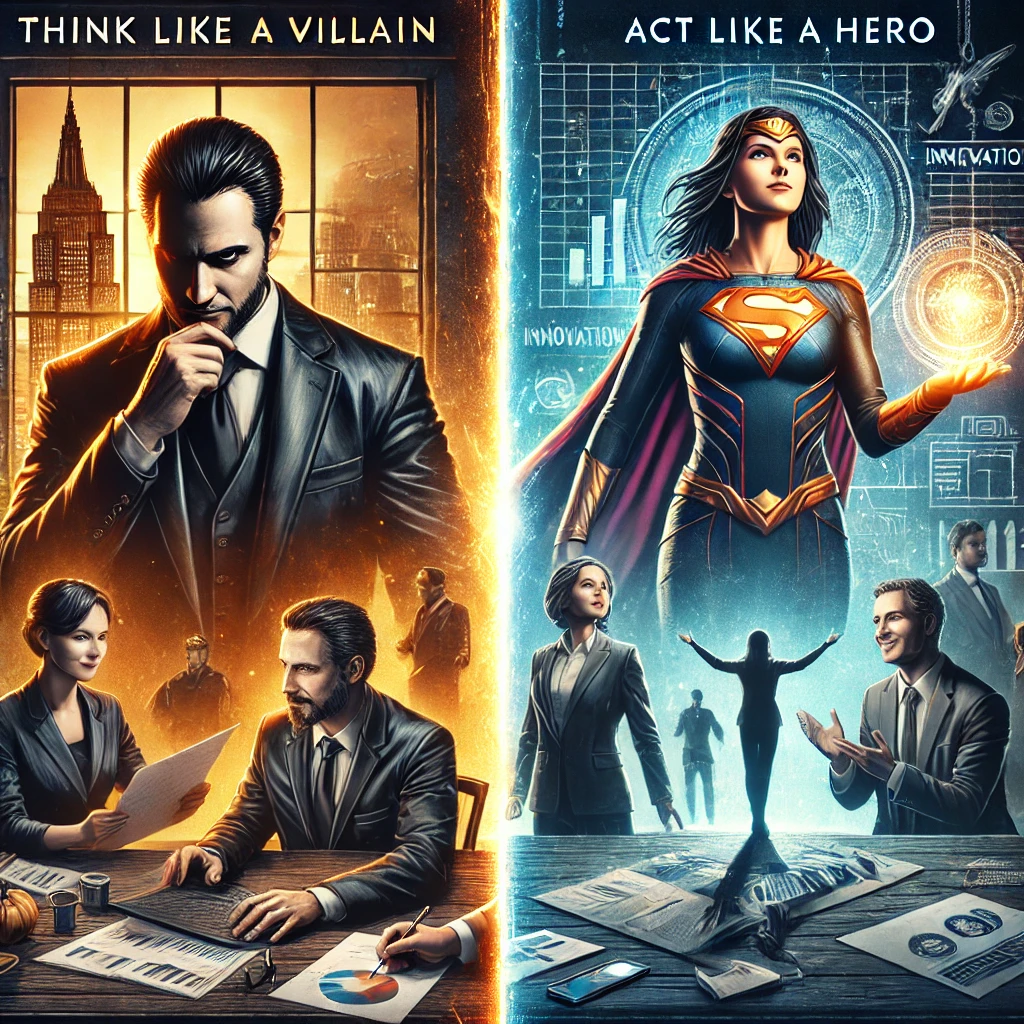
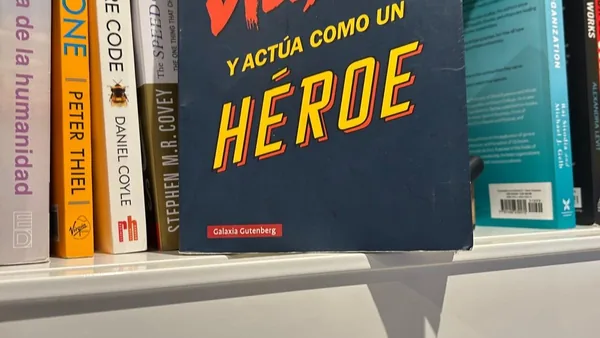
In the modern mythology of storytelling, from comics to superhero movies, villains and heroes are locked in an eternal fight for control, but deep down they're both after the same thing: making an impact. Some to destroy, others for the common good. Still, there's something to learn from both. In the book Think Like a Villain and Act Like a Hero, we're invited to explore how to think strategically, the way a villain would, but act with integrity, the way a hero would.
And this is where the key formula for creating value comes in, the one Nacho lays out:
*Create Value = Self-Awareness + Motivation (Creativity + Wisdom)Cooperation**

This formula captures what truly sets a hero apart from a villain, or even a leader from a plain manager. Let's break it down:
- Self-Awareness: The most effective heroes and villains in stories understand their strengths and weaknesses. Think of Tony Stark (Iron Man), a character who, as a potential villain, has all the ingredients: ego, power and resources. But it's his self-awareness that steers him toward acting like a hero, recognizing that his decisions have to be driven by something bigger than his own gain.
- Motivation: The difference between a hero and a villain usually comes down to motivation. While a villain like Thanos is driven by control and the belief that his extreme methods are necessary, a hero like Captain America is driven by justice and protecting others. In our professional lives, our motivation decides whether we create value for the common good or just for our own benefit.
- Creativity + Wisdom: Creativity without wisdom can be destructive. Villains are often incredibly creative, but their lack of wisdom leads them to use that ingenuity for dark ends. A leader or a hero, on the other hand, combines both qualities to find innovative solutions that benefit everyone. How do we apply this to our own leadership? Creativity lets us turn problems into opportunities, but wisdom is what guides us toward the best decisions.
- Cooperation: Finally, cooperation multiplies the value of everything above. Heroes rarely win alone. Even the most powerful, like Superman, need help from others to overcome the biggest challenges. In real life, cooperation is what makes teams stronger than individuals. When we join forces, we add up talents and perspectives, multiplying the value we can create.
Takeaway: Think strategically, act with integrity
The lesson in Think Like a Villain and Act Like a Hero reminds us that we all have the tools to create value. It's not just about having creativity or knowledge, it's about aligning those talents with the right motivation and the support of others. As leaders, we have to remember that acting like a hero doesn't always mean being perfect, it means understanding our intentions, using our skills with wisdom and always looking to cooperate for the common good.
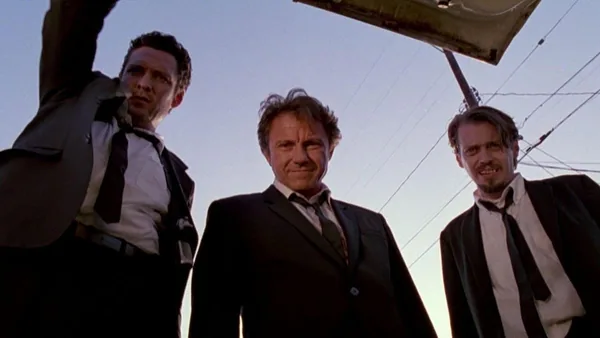
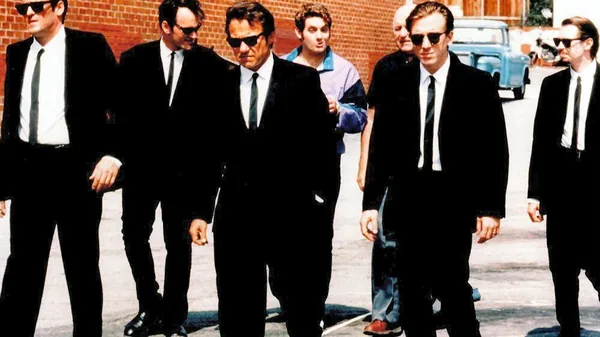
There's nothing like running the book's formula through different villains (a tip of the hat to James Bond):
See content credentials
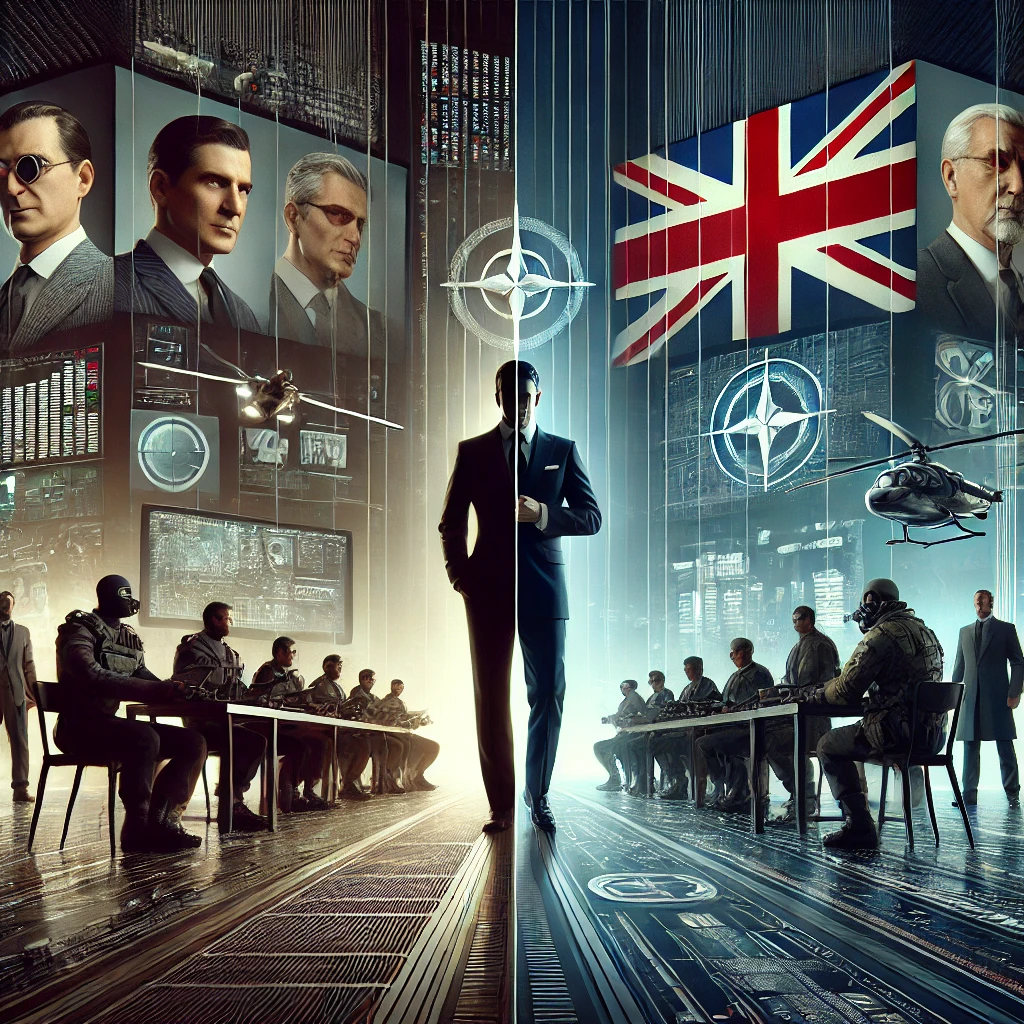
Villain 1: Ernst Stavro Blofeld (From Russia with Love,Thunderball,Spectre)
Blofeld, the leader of the criminal organization SPECTRE, is one of the most recurring villains in the James Bond saga and a master of long-game strategy.
- Self-Awareness: Blofeld is fully aware of his position of power and knows how to use it to manipulate people to his advantage. His deep grasp of his own strengths makes him a strategist who always seems one step ahead of his enemies.
- Motivation: His motivation is clear: global control. Blofeld isn't interested in chaos for its own sake, but in absolute power, which makes him a villain who uses meticulous planning to move toward his goal.
- Creativity and Wisdom: Through SPECTRE, Blofeld executes his plans with impressive precision, using advanced technology and almost unlimited resources. His creativity shows in the way he runs complex operations, but his lack of moral wisdom leads him to a destructive use of his intelligence.
- Cooperation: Blofeld doesn't work alone. SPECTRE is a vast network of criminal cooperation that carries out his orders all over the world, an example of how a leader can build an efficient global organization, even if in his case it's for evil ends.
Villain 2: Auric Goldfinger (Goldfinger)
Goldfinger is one of the most famous villains in the series, known for his obsession with gold and his plan to irradiate Fort Knox to drive up the value of his own reserves.
- Self-Awareness: Goldfinger is a master of the finance and smuggling game. He knows his ability to manipulate the market gives him an edge over his competitors, and he focuses on exploiting that ability to the fullest.
- Motivation: Unlike Blofeld, Goldfinger's motivation is purely personal: he wants to grow his wealth at any cost. Even though his goal is far more materialistic, his ambition pushes him to act in creative, calculated ways.
- Creativity and Wisdom: Goldfinger shows impressive ingenuity in dreaming up a plan to irradiate the gold in Fort Knox, an incredibly creative idea for manipulating the global economy. But his lack of wisdom in weighing the moral fallout of his actions makes him a villain with no ethics.
- Cooperation: Like many Bond villains, Goldfinger doesn't work alone. He surrounds himself with accomplices like Oddjob, his deadly right hand, to pull off his operations, showing a clear understanding of the value of cooperation, even for sinister ends.
Villain 3: Raoul Silva (Skyfall)
Raoul Silva is one of the most personal villains in the James Bond saga, driven by a desire for revenge against M, his former boss at MI6.
- Self-Awareness: Silva is acutely aware of his skills in cyberterrorism and psychological manipulation. As a former MI6 agent, he knows the system's weak spots and uses that knowledge to sow chaos inside the very organization he once served.
- Motivation: Unlike villains chasing power or wealth, Silva is driven by personal revenge. That hunger for payback gives him relentless energy, making him an extremely dangerous opponent for Bond.
- Creativity and Wisdom: Silva uses his technological skill to destabilize all of MI6 from within, an innovative approach that breaks with the traditional rules of espionage. But his personal obsession clouds his wisdom, leading him to make decisions driven by emotion instead of reason.
- Cooperation: Although Silva works more independently than other villains, he still leans on a team of cybercriminals to carry out his attacks, proving that even the most individualistic villains need cooperation to reach their goals.
Takeaway: The balance between strategy and ethics
Blofeld, Goldfinger and Silva all show us that self-awareness, a clear motivation, creativity and the ability to cooperate are essential for reaching any goal, whether for good or for ill. The key difference between a hero and a villain, according to Think Like a Villain and Act Like a Hero, is how we use these skills.
We can learn from villains by appreciating their strategic planning and their ability to shape the world, but we have to act like heroes, steering those skills toward creating value that's positive, sustainable and ethical. The value-creation formula reminds us that to be true leaders, we have to be as strategic as the villains, but with the moral wisdom and the cooperation it takes to build, instead of destroy.
In the end, real success comes from using our abilities to leave a lasting impact, one that benefits not just ourselves but the people around us.
BONUS TRACK (for the real die-hards)
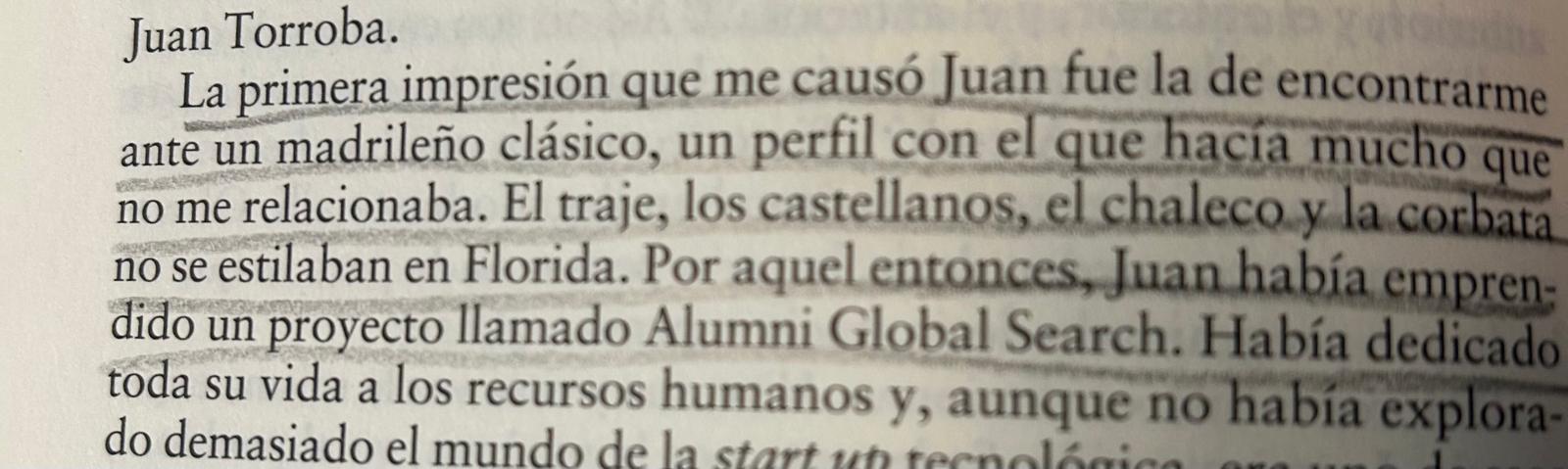
I love the shout-out to a great headhunter and entrepreneur like Juan Torroba , who put me onto this brilliant author, Nacho Lucea. Here's the reference 😉. A big thank you to both for being a source of inspiration.