Between the Lines of Leadership · A Headhunter's Picks (8)
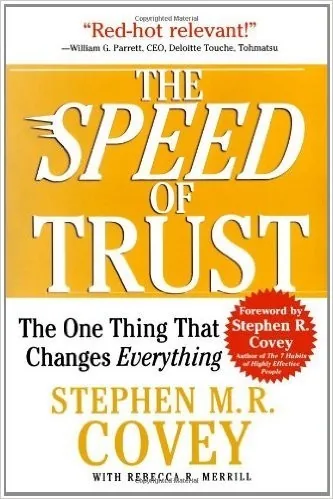
The Speed of Trust Stephen M. R. Covey https://amzn.eu/d/0GDl6eO
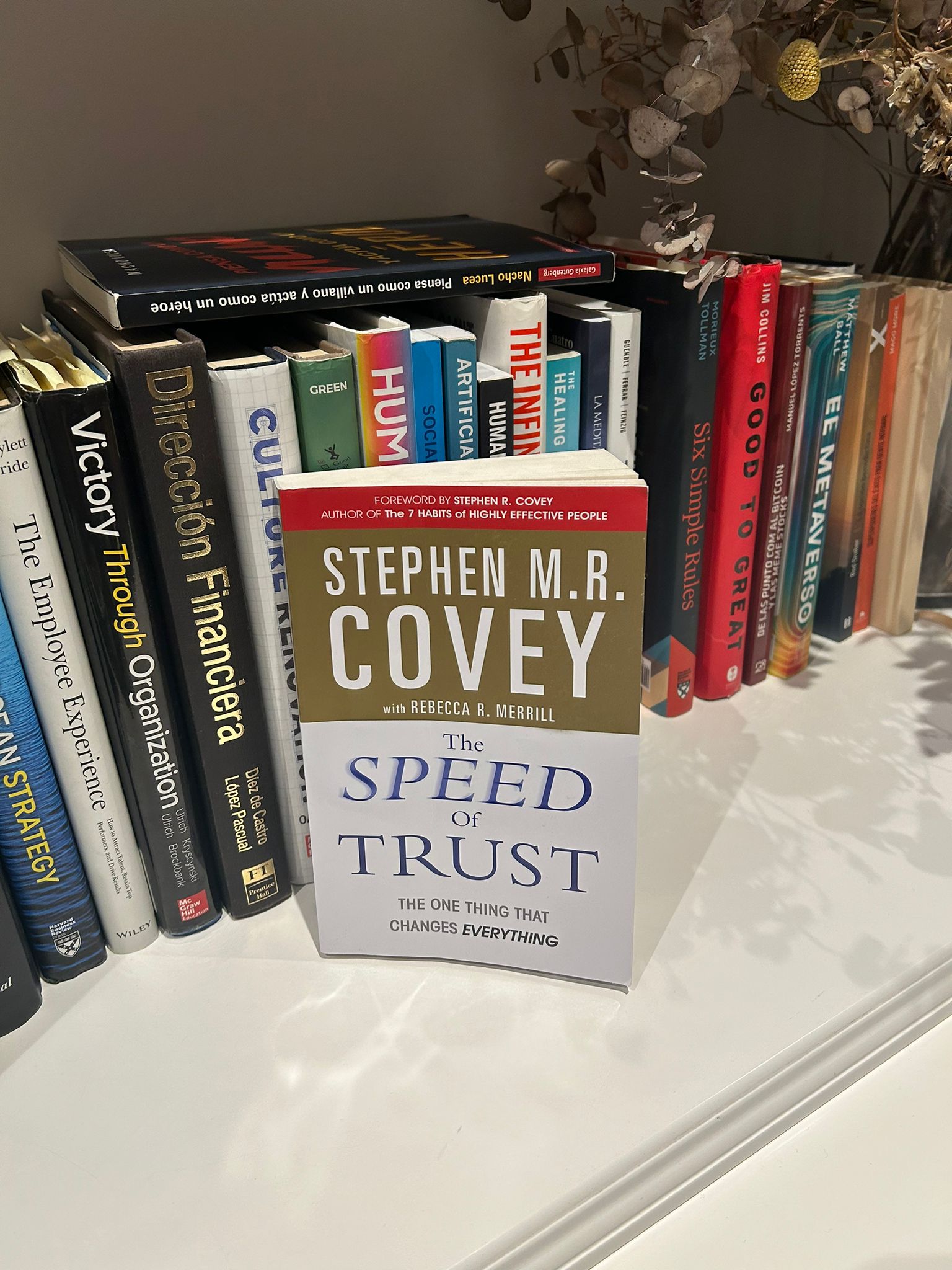
Eleven years ago, when I got promoted to director at the multinational I was working for (Michael Page, let's keep that "Infinite Game" mindset going 😊, see earlier editions), I was lucky enough to join its leadership academy. There were several reads, but one that really stuck with me and made it into my classics was "The Speed of Trust" (huge thanks to Esther Roman for framing it the way she did, forever grateful). Clearly the origin of a lot of things that today let me experience and enjoy the business world in a completely different way.
Getting into the book itself, what stands out is the importance of trust as a fundamental driver of both personal and organizational effectiveness.
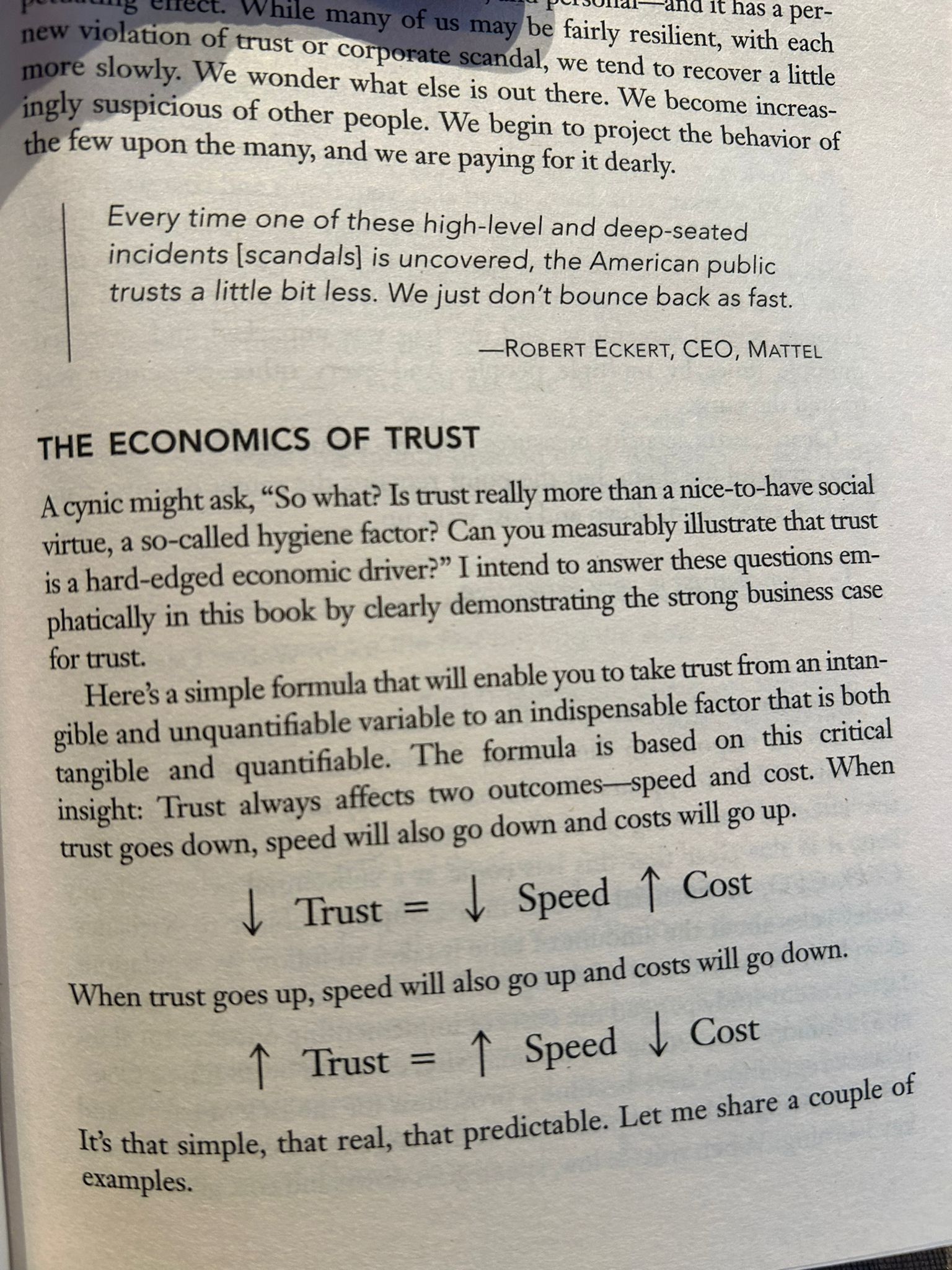
- Trust affects everything: Covey argues that trust isn't just a "nice" social quality, it's a critical economic variable that can build or destroy business value. Trust shapes the speed and the cost of every commercial transaction.
- The five levels of trust: The book lays out five levels where trust can be built or broken: self-trust, relationship trust, organizational trust, market trust and societal trust. Each level gives you a framework to understand how trust works and how you can grow it.
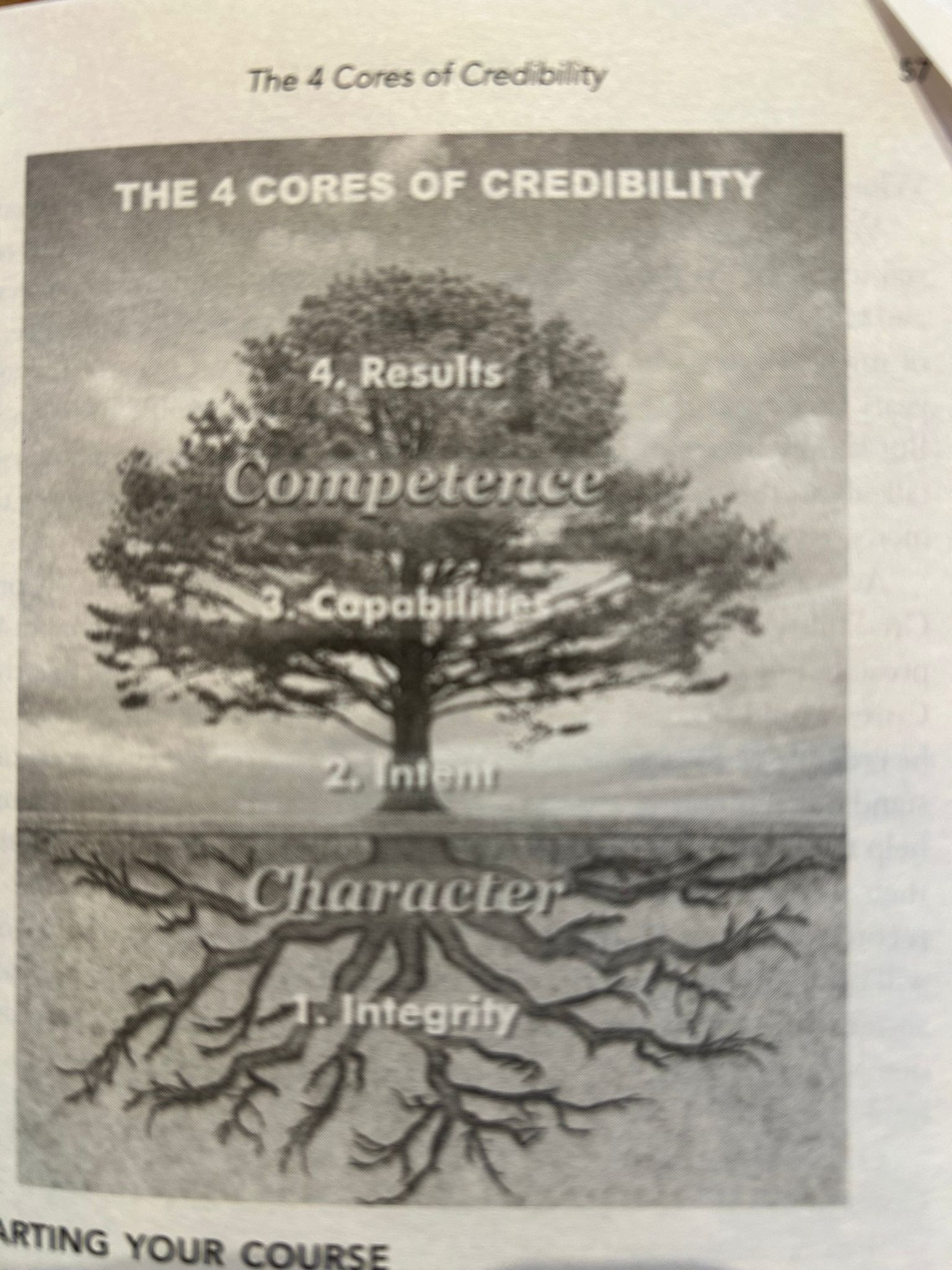
- The four cores of credibility: According to Covey, personal and organizational credibility rests on four elements: integrity, intent, capabilities and results. Integrity and the right intentions set the foundation, while capabilities and results prove competence and reliability.
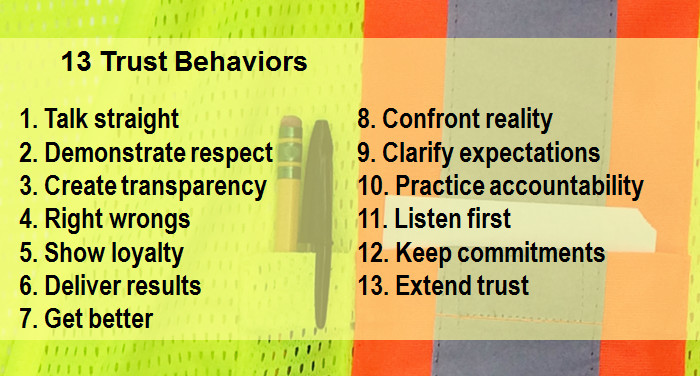
4. 13 high-trust behaviors: Covey identifies 13 behaviors that high-trust people and organizations practice consistently, like talking straight, demonstrating respect, creating transparency, righting wrongs and showing loyalty. These behaviors are essential to building and sustaining trusting relationships.
5. The circle of trust: Covey stresses that trust starts with yourself and then expands out to your close relationships, your organizations, your markets and society. The point is that by improving self-trust, you can effectively raise the levels of trust in all the outer circles too.
6. The ripples of trust: This idea shows how trust spreads from the individual level outward, reaching entire organizations and society at large. Small positive actions can produce wide, positive effects.
7. The economics of trust: Covey argues that trust has a tangible impact on economic results, pointing out that high-trust organizations enjoy lower transaction costs, higher levels of innovation, faster execution and greater loyalty from customers and employees.
8. Restoring trust: He also offers strategies to repair and restore trust once it's been damaged, highlighting the role of sincerity, transparency and accountability throughout the repair process.
(I love this video, it's part of Covey's course, simple but crystal clear.)
The most powerful takeaway from the book is that trust is far more than a moral quality or an intangible value; it's a fundamental operating principle that, when you cultivate and sustain it, can transform individuals, organizations and entire societies. Trust has the power to accelerate progress and efficiency, cut costs and foster genuine, lasting collaboration. The book's central premise is that building and keeping trust doesn't just improve relationships and quality of life, it also delivers a tangible, measurable competitive advantage. Covey makes the case that trust should be seen as a critical skill you can learn, develop and measure, and whose impact reaches far beyond the surface, directly shaping the success and sustainability of any collective effort.
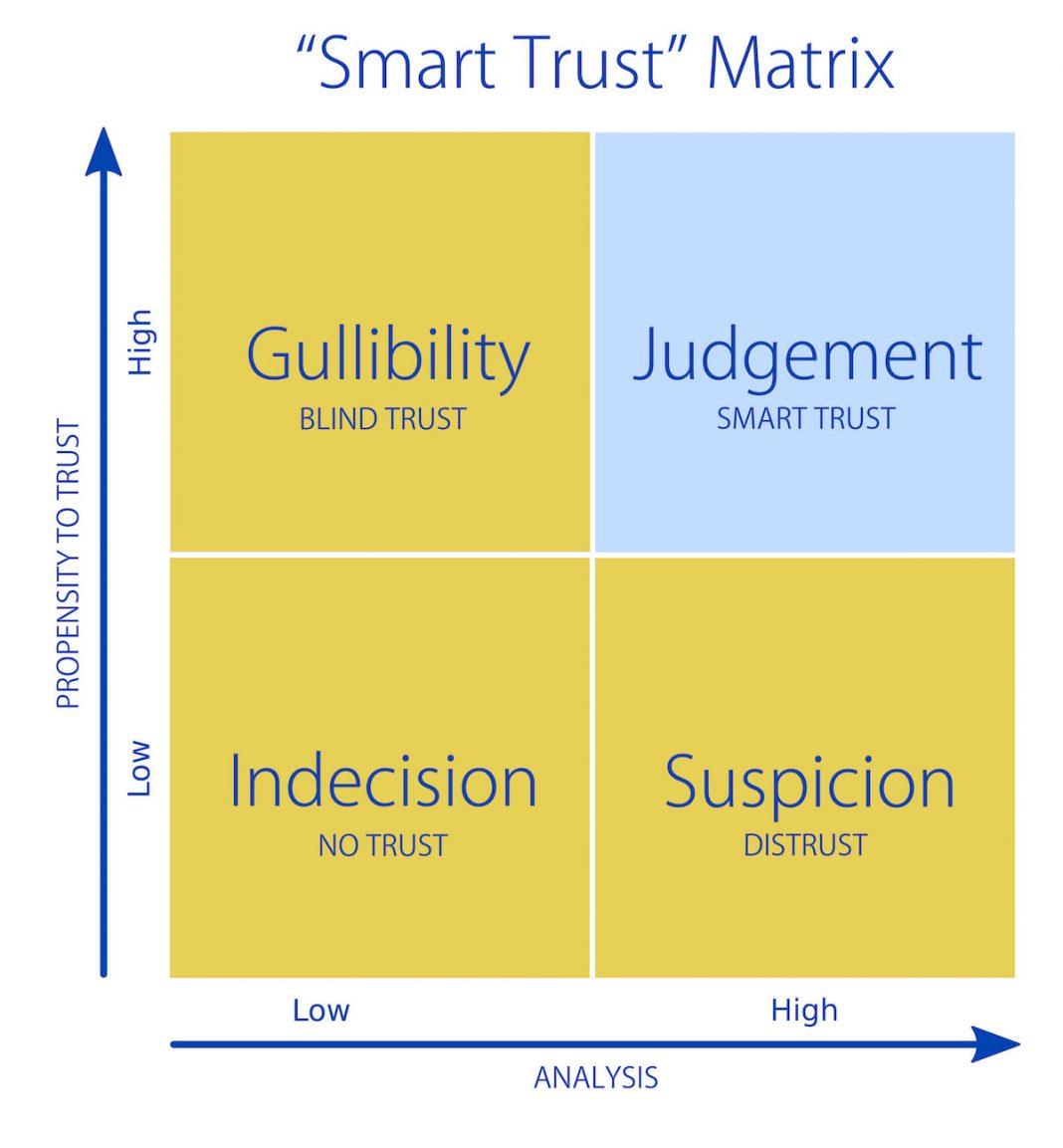
And to close it out, none of the above makes sense without "Smart Trust".
It's about extending trust intelligently, balancing openness with critical analysis based on competence and character.
https://leap.emids.com/smart-trust-a-smart-idea-for-the-team-and-the-business/
There are plenty of videos out there, but this one sums up the idea and the book well.