Between the Lines of Leadership · A Headhunter's Picks (7)
"Good to Great: Why Some Companies Make the Leap... and Others Don't" by #Jim Collins https://amzn.eu/d/arYvDVO
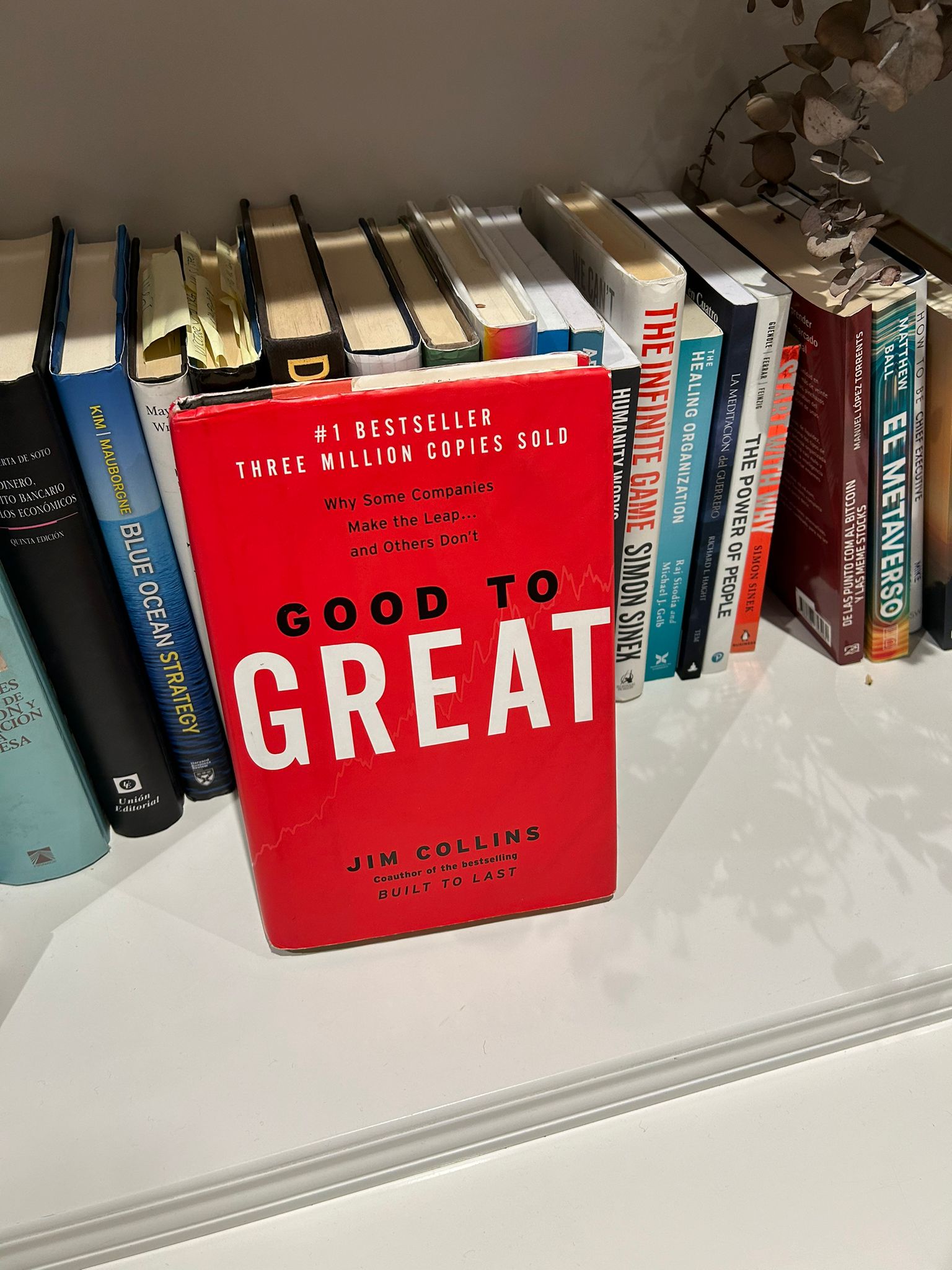
"Good to Great: Why Some Companies Make the Leap... and Others Don't" is a business management book by Jim Collins, published in 2001. Collins and his research team ran a rigorous five-year study to figure out what makes a company truly great. They analyzed 1,435 companies and narrowed the list down to 11 elite firms that made the jump from good to great and sustained that excellence for at least fifteen years. Through their research, Collins identifies several key concepts these companies put into practice to pull off their transformation.
This book is a deep, thought-provoking read, and it's become one of those resources I keep going back to every time I kick off a new project.
Before we dig into the key concepts, there's one I find especially fascinating and want to flag: the primacy of the "WHO" over the "WHAT". Yes, it's crucial to first define the purpose (the "WHY") of your venture, as we covered in the previous edition. But once that foundation is set, who you bring along on the journey matters enormously. The specific direction you take is, to a degree, secondary. What's essential is being clear on your goals and your starting point (from A to B). When you've got an exceptional team, the journey itself becomes a rewarding experience, no matter which of the many routes you take to the same destination (enjoy the ride!).
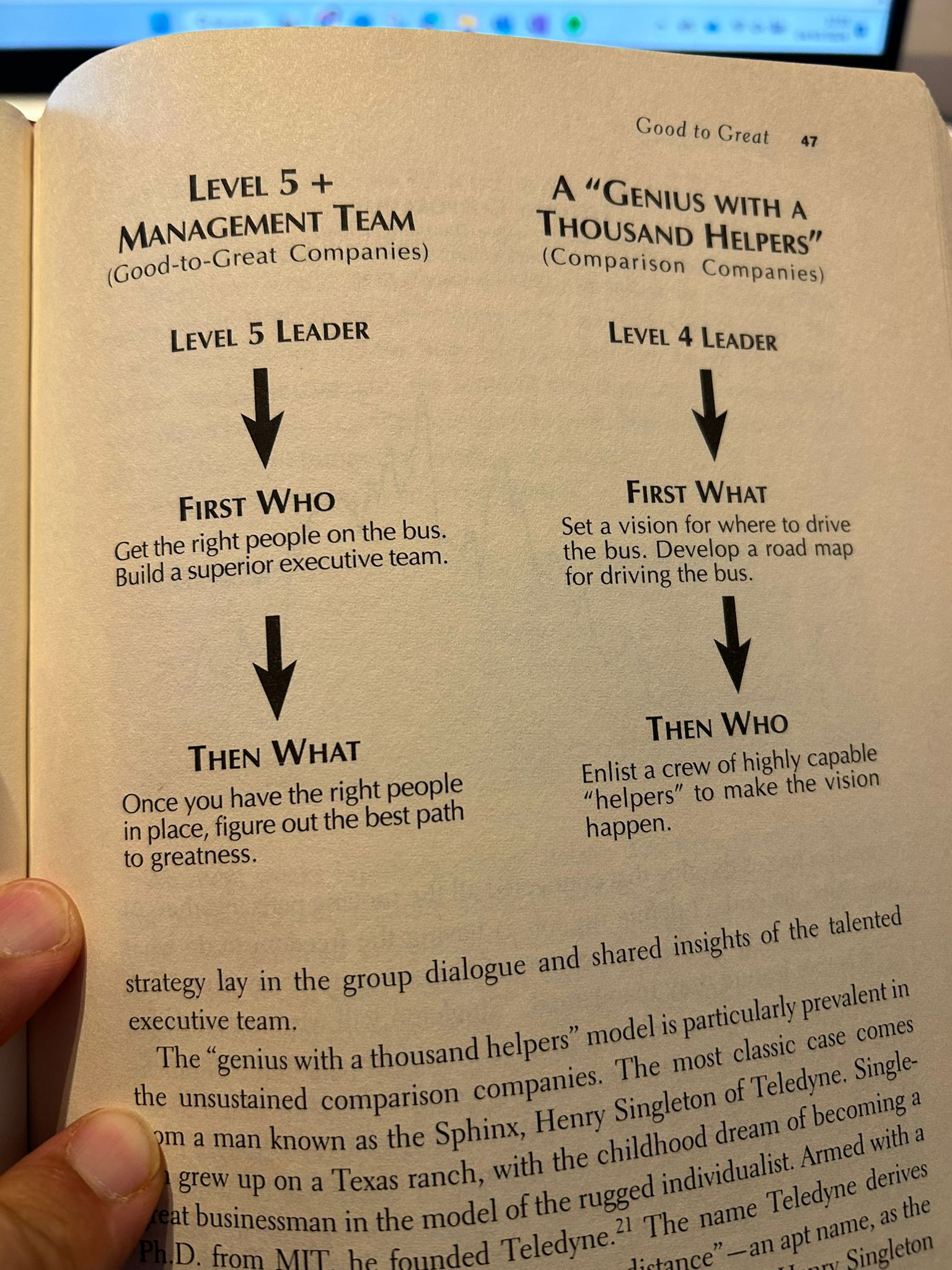
Chapter 3, page 47
For me, the importance of the "WHO" stands as one of the book's core lessons, and it shapes how I see leadership and growth in business.
Here are the rest of the key points:
The Book's Main Concepts:
- Level 5 Leadership: Leaders who are humble yet fiercely determined, channeling their ego toward the company's goals rather than themselves. Leading in a spirit of service.
(the video explains it more visually ;))
- First Who, Then What: Companies need to get the right people on the bus (and the wrong ones off it) before deciding where the bus is headed.
- Confront the Brutal Facts: Great companies aren't afraid to face the hardest truths about their current situation, while keeping the faith that they'll prevail in the end.
- The Hedgehog Concept: Boiling complexity down to one simple concept that guides every decision. It's built on deeply understanding what you can be the best in the world at, your economic engine, and your passion.
- A Culture of Discipline: Companies that combine disciplined people, disciplined thought and disciplined action.
- Technology Accelerators: These companies don't see technology as the main driver of change; they use it to accelerate momentum.
- The Flywheel: There's no miracle program that turns a company from good to great, just a series of cumulative, consistent actions over time.
Conclusion:
"Good to Great" offers a roadmap for companies that want to not just survive but thrive over the long haul. Collins drives home that there are no quick fixes for becoming a great company; instead, it takes a mix of strong leadership, a clear vision, and a relentless pursuit of excellence through discipline and commitment to core principles.