Between the Lines of Leadership · A Headhunter's Picks (3)
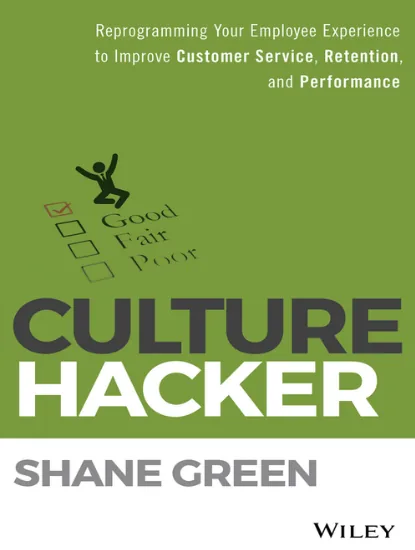
Culture Hacker: Reprogramming Your Employee Experience to Improve Customer Service, Retention, and Performance
Find out how to build a high-performance culture grounded in real values and inspiring leaders.
By Shane Green https://amzn.eu/d/8fYV0gG
In my ongoing hunt for sources of inspiration and knowledge that genuinely change how we understand and live company culture, I've stumbled on some literary gems that are now part of my go-to collection. Among them, "Culture Hacker" by Shane Green stands out as a beacon lighting the path to an authentic organizational culture, far from the surface-level values that, both in my own experience and in what clients have shared with me, so often feel more decorative than real. This book drives home the idea that when you cultivate a genuine culture (our number one focus at W Executive España), built on solid principles and not "sticker values", you don't just make the workplace better, you fire up the engine of your company's exponential growth. This approach can be a game changer for your business.
Have you ever asked yourself why some companies win and others fail? What makes their people feel motivated, engaged and happy? How do they manage to build an atmosphere of trust, collaboration and creativity?
These are some of the questions author Shane Green sets out to answer in his book Culture Hacker, a practical guide to transforming your organization's culture and lifting its results. Green, an expert consultant on organizational culture, shares his experiences and advice for hacking your company's culture and adapting it to the challenges of the 21st century.
Real company values: they're not a philosophy, they're a behavior
(love this... let's skip the BS :))
In chapter 2 of the book, Green explains that company values aren't a philosophical statement you hang on the wall, they're a set of measurable behaviors that define how the work gets done and how you treat customers and colleagues. A company's real values are the ones you live and demonstrate every day, not the ones you say and forget.
To build a culture grounded in real values, Green lays out a four-step process:
· Identify the values that matter to your organization and that reflect its purpose, vision and mission.
· Define the specific behaviors that demonstrate each value in practice, both internally and externally.
· Communicate the values and behaviors at every level of the organization, from senior leadership to frontline employees.
· Recognize and reward the people who show the desired values and behaviors, and correct the ones who don't.
That's how you build a culture of real values, one that translates into better performance, greater satisfaction and deeper loyalty from your team and your customers.
Managers and leaders: managing isn't the same as inspiring
(I've always been a fan of the number 13, I'll save that for a more personal newsletter :))
In chapter 13 of the book, Green digs into the difference between managers and leaders, and why you need both in an organization. According to Green, managers are the ones who plan, organize, control and execute the company's tasks and processes. Leaders, on the other hand, are the ones who inspire, motivate, influence and develop the company's people and teams.
Green argues that both roles are necessary, but they often get confused or blurred together, which creates problems with communication, coordination and performance. To avoid that, Green proposes a four-element model that defines an effective leader:
· Passion: a leader has to have genuine passion for what they do, for the company's mission and for the people who make it up. Passion is contagious and becomes an engine of change and innovation. (On this point I'll leave you a link to my talk at #TopHumanLeaders, where in 5 minutes I make the case for passion as the engine of companies, but above all of successful people https://youtu.be/FRQDa4ZxVDo?si=zjLgPRqUZFupkFJ2)
· Effort: a leader has to lead by example and work hard to hit the company's goals and targets. Effort gets noticed and valued, and it builds a climate of trust and respect.
· Expertise: a leader has to have deep, up-to-date knowledge of their field, of market trends and of customer needs. Expertise gets shared and put to work, and it creates an environment of learning and continuous improvement.
· Experience: a leader has to have a career that's given them the skills and competencies to solve problems, make decisions and take on challenges. Experience gets passed on and applied, and it makes room for growth and development.
On top of these four elements, Green adds a fifth factor that's essential for a leader: care. A leader has to care about their employees, their customers and their community, showing interest, empathy and responsibility. Care gets expressed and felt, and it fosters a culture of wellbeing and commitment.
A case study of a leader who brings all five factors together is Howard Schultz, the founder and former CEO of Starbucks. Schultz managed to build a high-performance culture grounded in real values and inspiring leaders, and you can see it in the quality of his products, the satisfaction of his customers and the loyalty of his people.
If you want to go deeper on how to hack your organization's culture and turn it into a competitive advantage, I'd encourage you to read Culture Hacker by Shane Green.