Between the Lines of Leadership · A Headhunter's Picks (51)
In this edition we go back to where this newsletter started, back when it was the books that gave us our start. So, with summer here, I want to share a recommendation that doesn't just invite us to take care of ourselves, but to take care of our organizations too. Because there's no better time than now to slow down, reflect and learn.
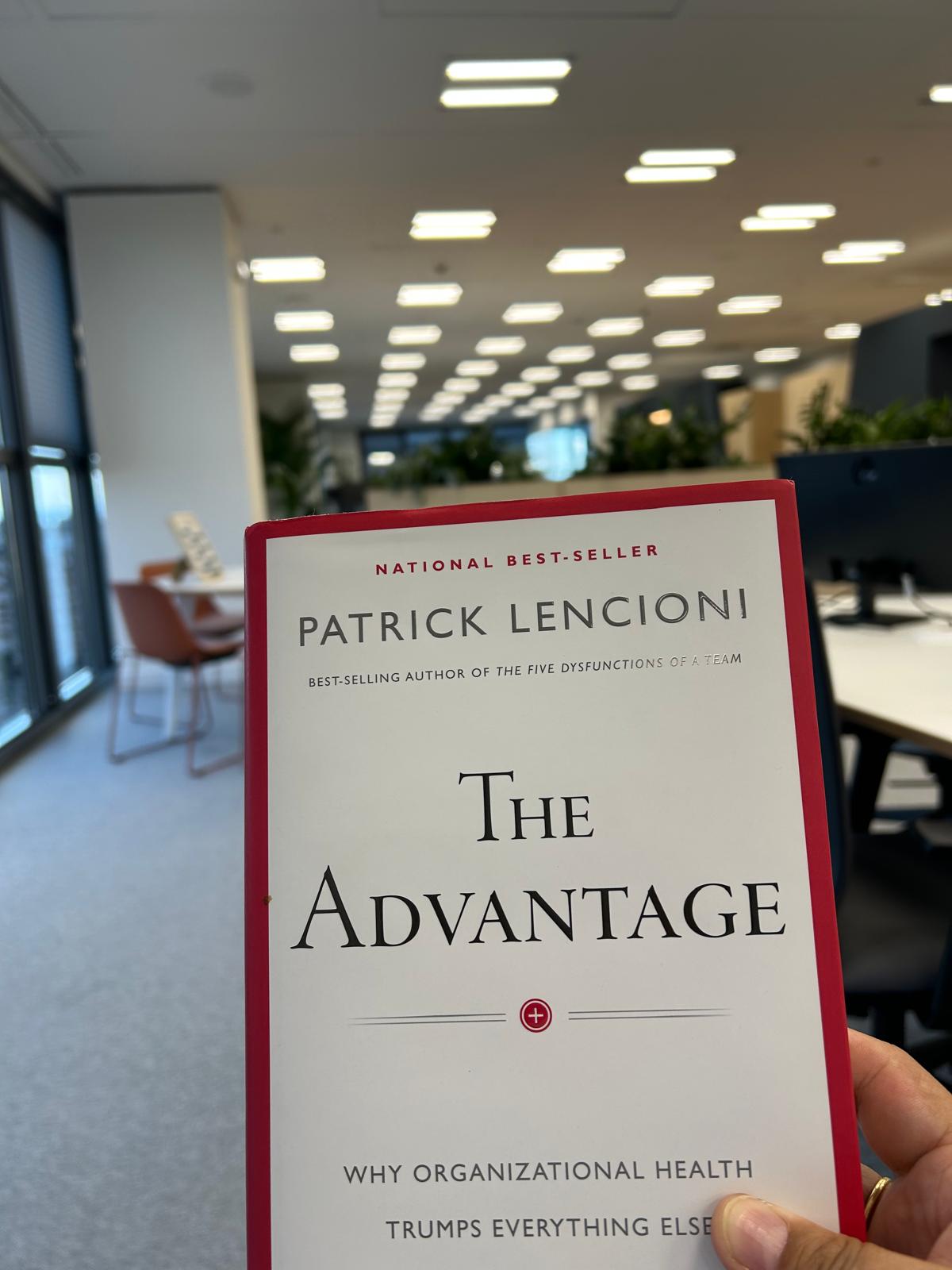
In a world where companies compete to innovate, sell more or get more visible, plenty of them forget the most basic thing of all: organizational health. That intangible that, when you take care of it, changes everything. This is the big lesson Patrick Lencioni shares in his book "The Advantage", and one we've made part of how we understand talent and business at W Executive España.
Organizational Health: the advantage few people see
Lencioni puts it bluntly: organizational health beats every other priority in a company. Being "smart" isn't enough, the best strategy, the best technology or the best numbers won't save you if the organization is sick on the inside, riddled with power struggles, distrust, confusion or no real sense of purpose.
A healthy company shows up as a team that's aligned, motivated and able to get the most out of its talent.
The four disciplines for building a healthy organization
Lencioni lays out a clear path:
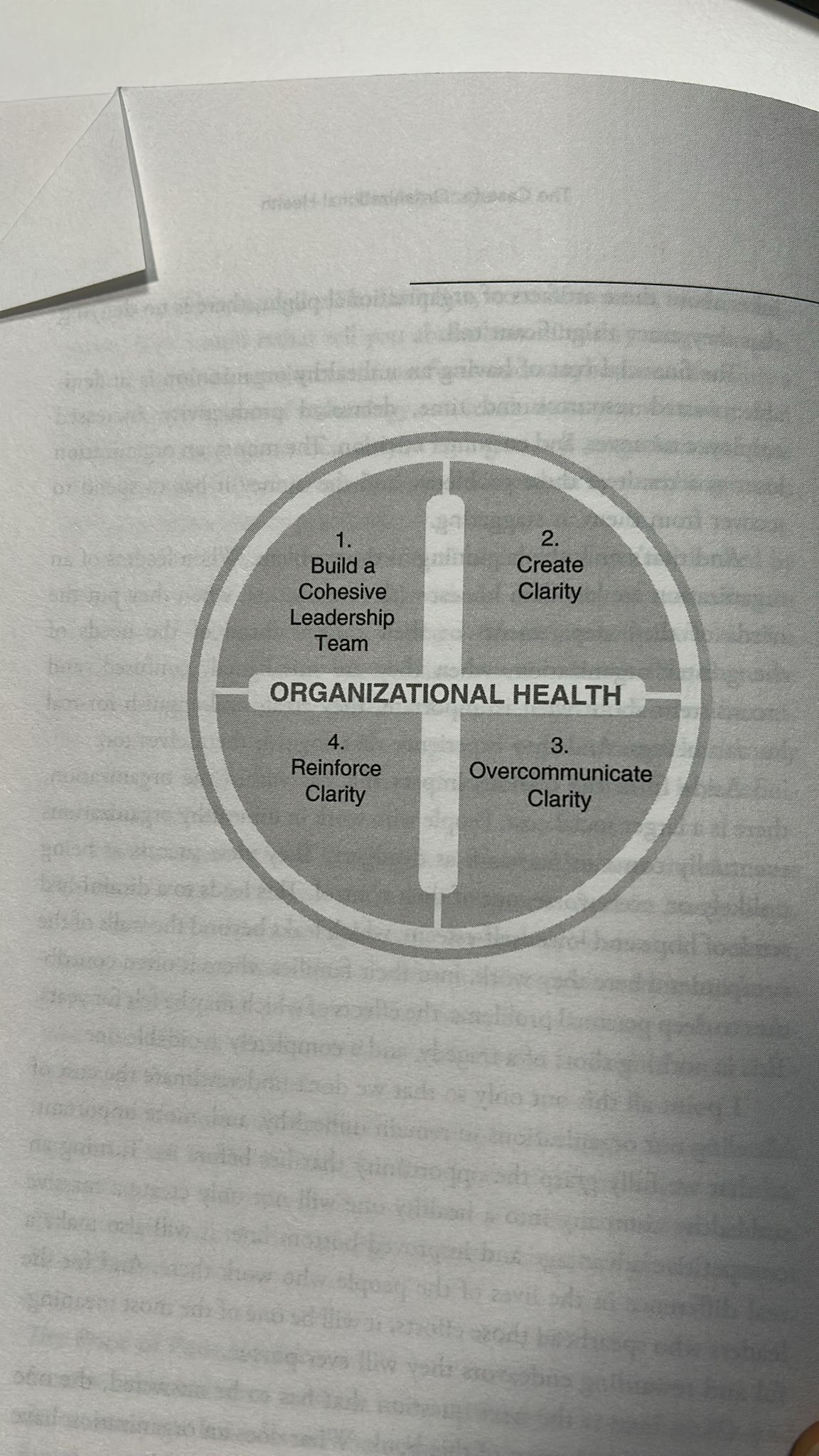
- 1. Build a cohesive leadership team: Trust is the foundation. No fear of being wrong, no fear of pushing back. Healthy conflict is what gets you to better decisions.
- 2. Create organizational clarity: Answer the key questions. Why do we exist? What sets us apart? What are our values? What matters most right now?
- 3. Overcommunicate the clarity: Defining it once doesn't cut it. You have to repeat it, tell it, weave it into every conversation and every action. Until you're sick of it.
- 4. Reinforce the clarity through human systems: Recruit, evaluate, promote and reward based on the values and the direction you want. If you don't reinforce it day to day, it dilutes.
The "Conflict Continuum": finding the sweet spot
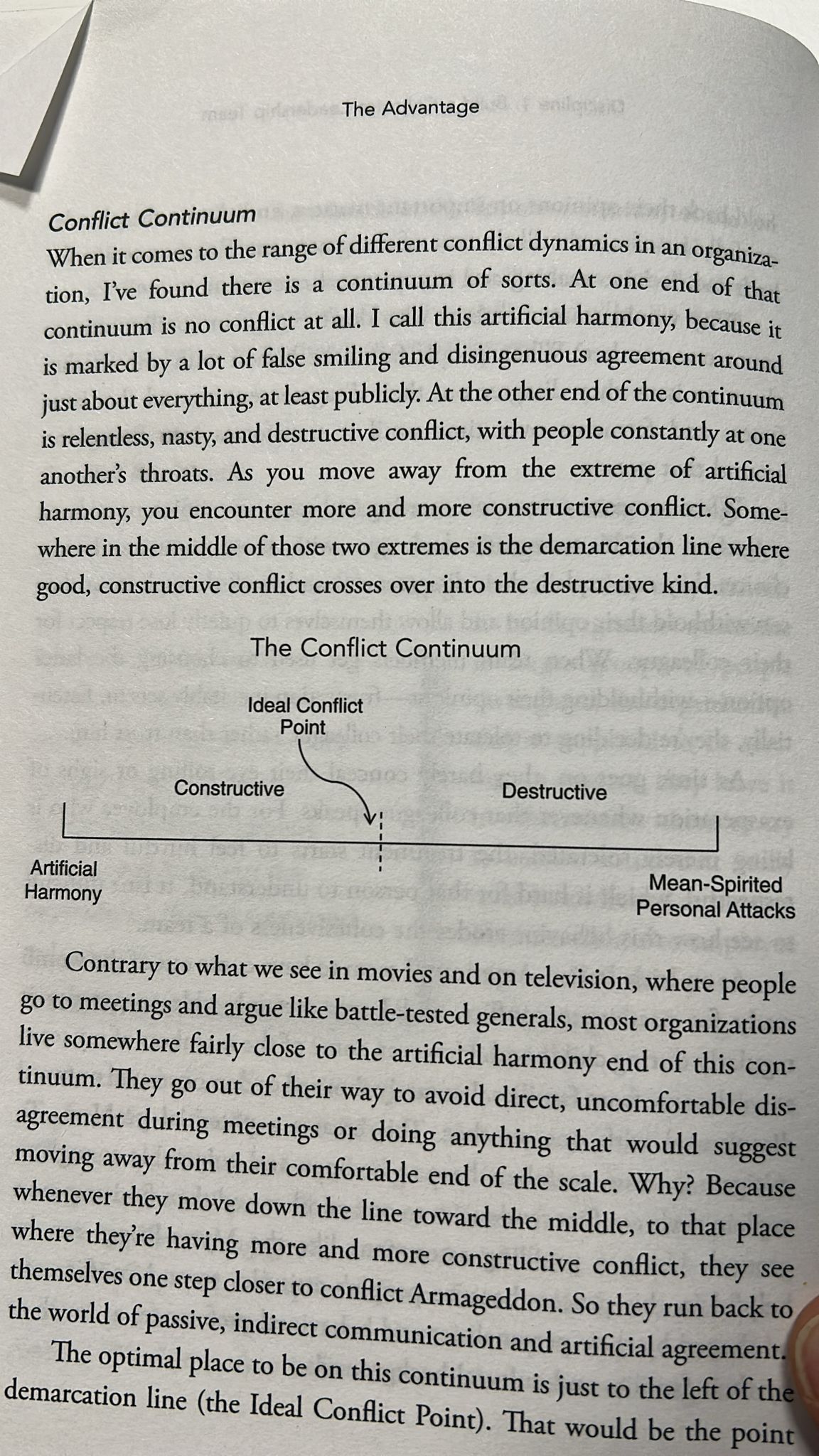
Lencioni introduces an idea that we find essential at W: the conflict continuum.
- At one end, "artificial harmony": teams that never argue, but never move forward either.
- At the other end, destructive conflict: arguments that damage relationships.
The sweet spot? A place where ideas get debated with honesty, respect and passion. Where people feel safe to speak up and contribute. Without that kind of conflict, there's no innovation and no real commitment.
Four types of meetings that transform teams
How many times have we heard that "meetings are a waste of time"? Lencioni dismantles that myth by proposing four types of meetings, each with a clear purpose:
- Daily check-in: 5-10 minutes to sync the team.
- Weekly tactical: 45-90 minutes to solve operational problems.
- Monthly strategic: 2-4 hours to think big and make the key calls.
- Quarterly off-site review: 1-2 days to review strategy, culture and strengthen the team.
The key: don't mix the topics. Each meeting has its function, its rhythm and its impact. Run them well, and meetings turn into levers for culture and performance.
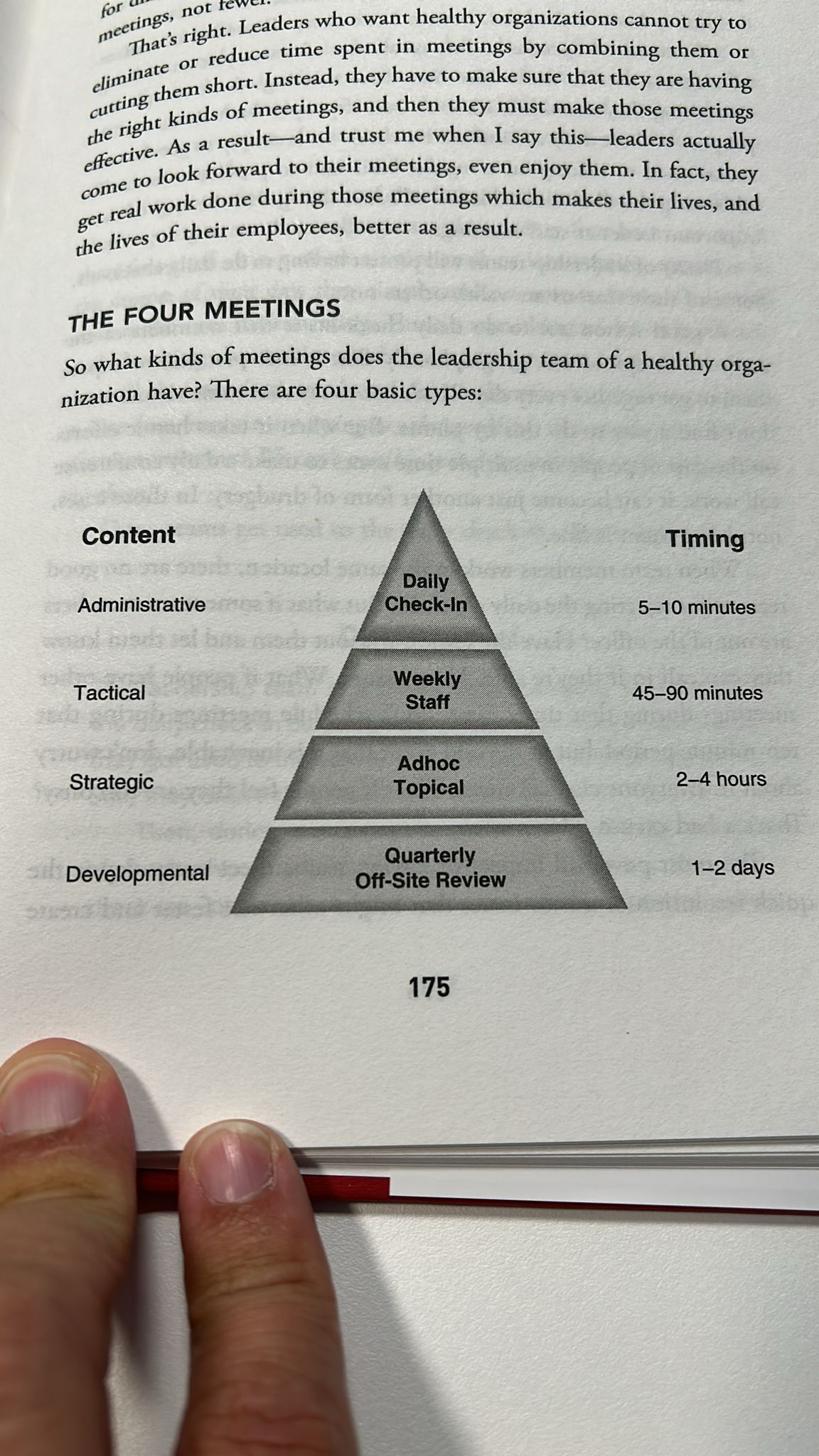
from the book
What does this have to do with talent?
Everything.
At W we believe cultivating talent isn't just about attracting it. It's about building an environment where talent can grow, express itself and contribute. And that only happens in a healthy organization.
- An environment of trust drives commitment.
- A clear direction drives focus.
- Healthy conflict drives innovation.
- A coherent system reinforces the culture.
As leaders, we can't delegate organizational health. It's our responsibility, and it's without a doubt the best investment in talent any company can make.
Organizational health isn't a luxury or a trend. It's the foundation of everything. It's what lets talent flourish, teams come together and businesses thrive.
At W we know it: you only get far when you travel with the right people, in the right vehicle, with a clear heading and trust as your fuel.
As always, here's a video where you can get a more complete view of the book:
So, how healthy is your organization?