Between the Lines of Leadership · A Headhunter's Picks (44)
Almost a decade ago, I sat in on a master class byMiquel Lladó , thanks to the generosity of Michael Page, and it was a great session. Of all the ideas shared that day, one stuck with me ever since: the thousand-day theory.
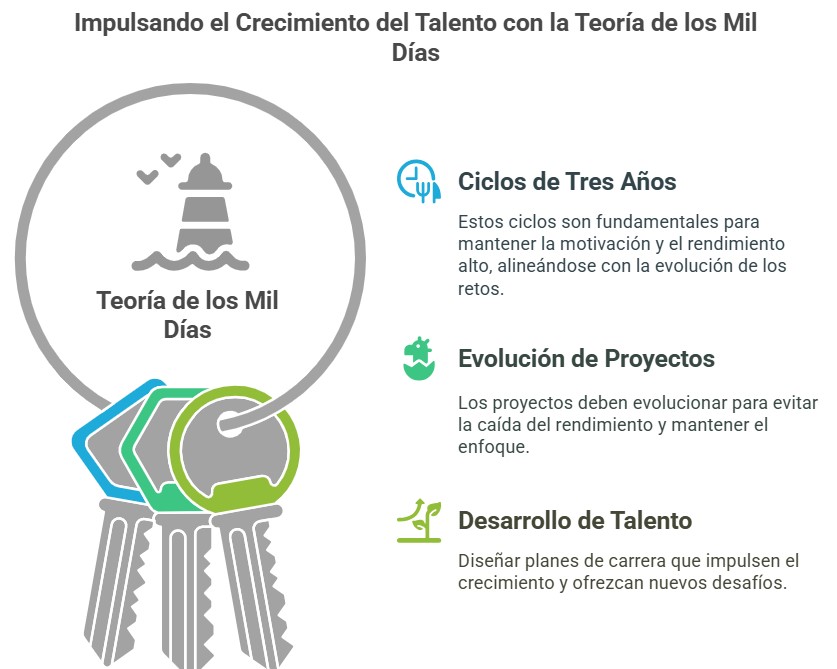
This idea has been a north star in how I understand leadership and talent development. It's helped me bring focus to each team member's projects and to see that, to keep motivation and high performance alive, every challenge should evolve in three-year cycles.
Talent isn't looking for stability, it's looking for challenges.
Just a week ago, Miquel published a post on this topic that inspired me all over again to launch this edition of the newsletter. I'm taking the liberty of building on his reflection and applying it to our day-to-day at W Executive. I hope he doesn't mind. Here's Miquel Lladó's original post on LinkedIn, well worth the read.
Today I want to share this theory with you and how we apply it at W Executive to design career paths that genuinely drive talent growth.

Three-year cycles: the key to high performance
- The window for impact is limited. Studies show that most executives change roles every 2.5 to 3 years. That's the sweet spot for making an impact before settling into the comfort zone.
- If a project doesn't change, performance drops. Motivation and focus tend to fade if there's no evolution within a 2-to-5-year window. The key is keeping the tension positive.
- Make strategic decisions with a sense of urgency. Thinking you only have three years to make changes forces you to prioritize what matters, move fast and leave a real legacy.
- Talent isn't looking for stability, it's looking for challenges. Companies that don't create new opportunities and challenges every three years risk losing their best people.
Talent is free: cultivate it, don't hold on to it
A lot of companies operate on a retention mindset, but at W Executive we see it differently: talent isn't a possession, it's energy in motion.
- Permanent contracts, but with three-year cycles. Each person should define their own growth and align it with the company's project.
- Alignment between company and talent. When both move in the same direction, you get perfect traction. When they drift apart, it's time to readjust or close the cycle.
- High-performance teams need to evolve. Rotations, new projects or challenges keep the tension positive and stop people from stalling.
Takeaways: what the thousand-day theory teaches us
- Use your time with a sense of urgency. If you know you've got three years to make a difference, what will you do today to make it happen?
- Challenge your team to evolve. Design projects with a beginning, a middle and an end, making sure they transform over time.
- Don't hold on to talent, create opportunities for it to grow. The best companies don't "own" talent, they propel it.
- Change is part of high performance. Knowing when to readjust, rotate or close a cycle is key to keep moving forward.
Bonus Track: Gary Vaynerchuk and the key to cultivating talent
Gary Vaynerchuk , a reference in leadership and company culture, puts it plainly: you don't retain talent, you nurture it and you propel it. (It's been a while since I shared anything of his and I couldn't resist :)).
- Don't tie people down, make them want to stay. The best talent chooses where to be, and it chooses where it can grow.
- Leaders should own their team's growth. A good leader doesn't just chase results, they help their people evolve.
- Culture is the key to success. Companies built on transparency, meritocracy and talent development always win.
- Change is inevitable, and it's a good thing. Every three years, talent needs a new challenge.
- Investing in people is investing in the business. Engaged teams deliver sustainable results.
At W Executive, we live by this philosophy because we believe talent needs movement, challenges and purpose. Our mission isn't to hold on to it, it's to cultivate it.
Thanks to Miquel Lladó for inspiring me with this theory years ago and for keeping the conversation going today. And thanks to everyone I've had the luck to work with, putting it into practice to design their career paths.